
Picture this: you're sitting in an open-plan office, trying to concentrate on a deadline while keyboards clatter, colleagues chat, and the hum of air conditioning drones on relentlessly. Or maybe you're navigating a crowded subway platform, the screech of brakes layering over announcements and conversations. For millions of busy professionals, this constant barrage of background noise isn't just annoying—it's a trigger for tinnitus, that persistent ringing or buzzing in the ears that erodes focus, disrupts sleep, and chips away at overall well-being. When your career demands sharp thinking and constant engagement, managing these symptoms becomes not just a health priority but a professional necessity.
So how can modern hearing aids provide effective relief in the midst of chaotic, noise-filled days? This article explores the advanced features that make today's hearing aids powerful tools for background noise management and tinnitus relief. From AI-driven sound processing and relaxation soundscapes to fast-charging batteries built for all-day performance, we'll examine how these devices are specifically designed to support active, demanding lifestyles without missing a beat.
The Impact of Background Noise on Busy Professionals and Tinnitus
Modern professionals spend their days immersed in sound. Open-plan offices—now the norm in most industries—expose workers to a constant mix of ringing phones, overlapping conversations, and mechanical hums from printers and HVAC systems. The commute bookending each workday adds another layer: traffic noise, transit announcements, and the rumble of engines create an unrelenting sonic environment that the brain must continuously process.
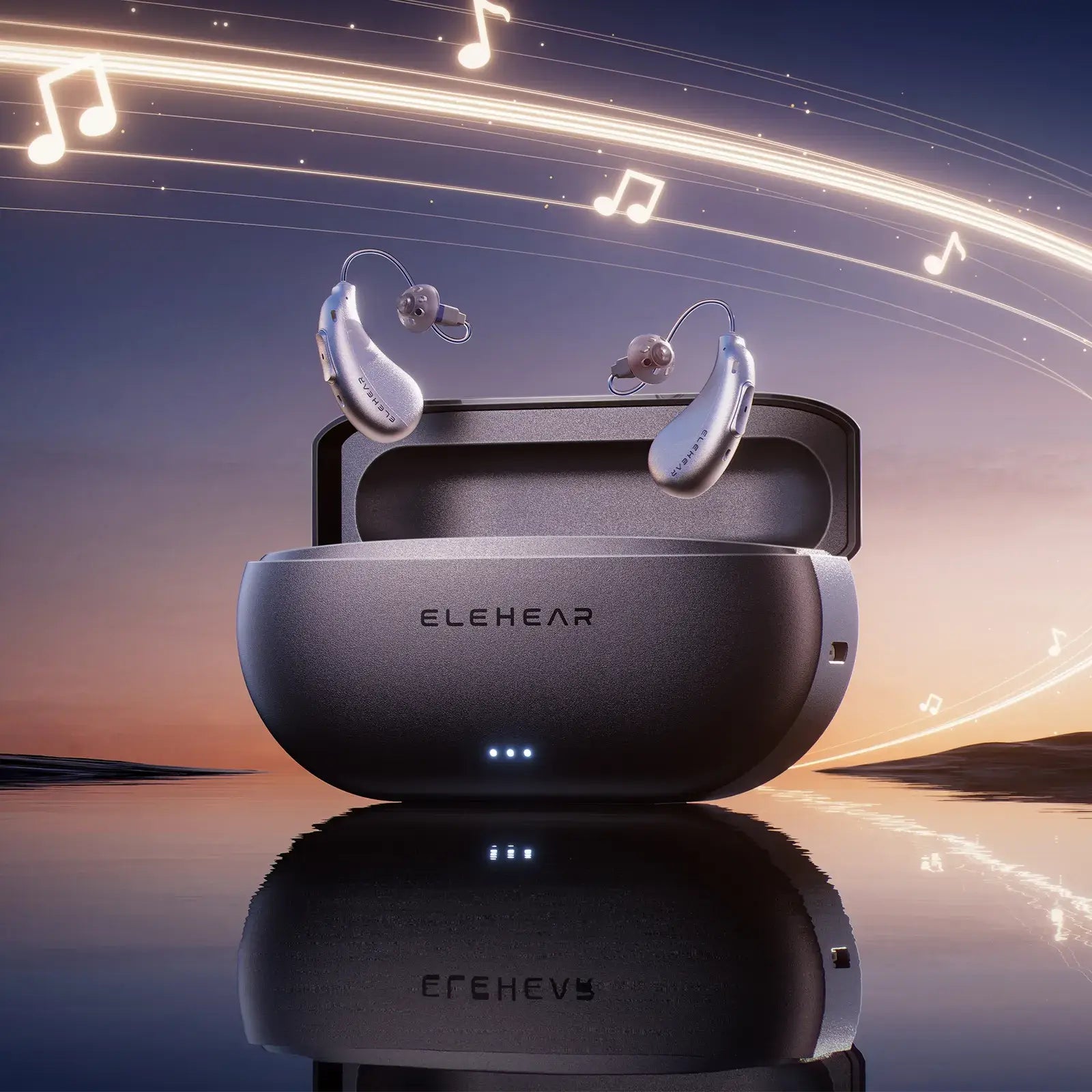
This sustained exposure doesn't just cause fatigue—it actively worsens tinnitus symptoms. Research consistently shows that prolonged background noise elevates cortisol levels, heightening stress responses that make the phantom ringing or buzzing of tinnitus more noticeable and harder to ignore. For professionals who depend on concentration, clear communication, and quick decision-making, this creates a vicious cycle: noise triggers tinnitus, tinnitus fractures focus, and diminished focus increases stress, which amplifies tinnitus further.
What makes this particularly challenging is the need for discretion. Most professionals can't step away from meetings, client calls, or collaborative sessions to manage their symptoms. They need solutions that work invisibly and continuously throughout the workday—tools that address both the external noise problem and the internal perception of tinnitus without drawing attention or requiring constant manual adjustment. This is precisely where modern hearing aids have carved out their niche, offering sophisticated relief that fits seamlessly into demanding schedules.
What Makes the Best Hearing Aids for Background Noise?
The best hearing aids for background noise share a common philosophy: they don't simply amplify everything—they intelligently separate what matters from what doesn't. This distinction is what transforms a basic amplification device into a sophisticated noise management tool capable of providing genuine relief in chaotic environments.
At the core of this capability are directional microphones, which focus on sound sources in front of the wearer while suppressing noise from the sides and behind. In a meeting room or during a one-on-one conversation, this means the speaker's voice comes through with remarkable clarity while the ambient chatter fades into the background. More advanced models employ multiple microphone arrays that can dynamically shift their focus as the sound environment changes, adapting in real time without any input from the wearer.
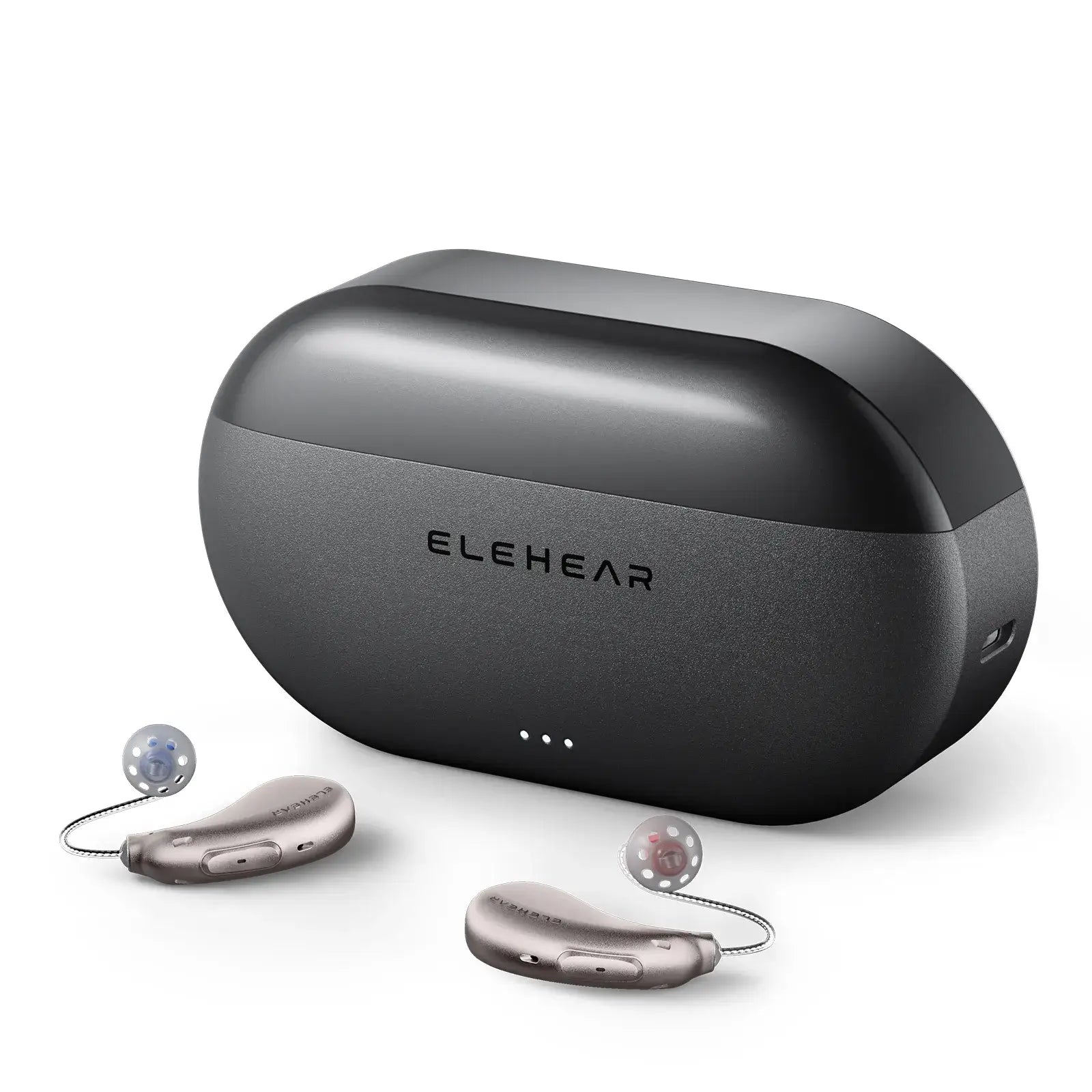
Noise cancellation algorithms represent another critical layer. These digital signal processing systems analyze incoming sound thousands of times per second, identifying repetitive patterns characteristic of background noise—air conditioning hum, traffic rumble, crowd murmur—and actively reducing their presence in the audio stream. The result is a cleaner listening experience that reduces the brain's processing load and, by extension, lessens the stress response that aggravates tinnitus.
Perhaps the most transformative advancement is AI-driven sound processing. Machine learning algorithms trained on millions of sound environments can classify a situation—restaurant, office, street, quiet room—and automatically apply the optimal combination of noise reduction, speech enhancement, and frequency adjustment. Brands like ELEHEAR have embraced these AI-driven systems, developing devices that learn from the wearer's preferences over time, becoming increasingly personalized. For busy professionals, this means the device essentially manages itself, delivering the right acoustic environment whether you're stepping into a boardroom or walking through a train station.
Real-World Testing: How Hearing Aids Perform in Noisy Settings
Specifications on paper only tell part of the story. The true measure of any hearing aid's noise management capability emerges in unpredictable, real-world environments where multiple sound sources compete simultaneously. Clinical studies have consistently demonstrated that modern hearing aids with adaptive noise reduction improve speech recognition scores by 30 to 50 percent in noisy settings compared to unaided listening—a difference that translates directly into fewer missed words during meetings and less mental exhaustion at day's end.
Users frequently report the most dramatic improvements in scenarios like busy cafés, where overlapping conversations and background music once made social interaction exhausting. In professional contexts, conference calls taken in open offices become manageable rather than stressful, and networking events shift from overwhelming to navigable. When testing a device yourself, try it in at least three distinct environments: a quiet office for baseline comfort, a moderately noisy café for speech-in-noise performance, and a loud transit setting to evaluate maximum noise suppression. Spend at least a full workday with the device before drawing conclusions, paying attention to how fatigued you feel by evening compared to your usual experience. Ask a colleague to speak to you from different angles and distances to gauge how well the directional system tracks conversation in real conditions.
Integrating Relaxation Soundscapes for Effective Tinnitus Management
Beyond suppressing external noise, many modern hearing aids now incorporate built-in relaxation soundscapes—carefully engineered audio environments that mask tinnitus perception and promote a sense of calm. These soundscapes range from ocean waves and rainfall to gentle white noise and soft chimes, all designed to provide the brain with neutral, soothing stimuli that redirect attention away from the phantom ringing or buzzing of tinnitus. The underlying principle is sound enrichment therapy: by filling the auditory space with pleasant, low-level sound, the brain's fixation on tinnitus signals diminishes, reducing both the perceived loudness and the emotional distress associated with the condition.
For busy professionals, the appeal of integrated soundscapes lies in their immediacy and discretion. Rather than needing a separate app, headphones, or dedicated quiet space, relief is available instantly through the device already in your ear. During a stressful afternoon when tinnitus spikes, a quick tap on a smartphone companion app or a subtle touch on the device itself activates a calming soundscape that runs beneath normal hearing—colleagues won't notice a thing. Many apps allow granular customization: you can blend multiple sounds, adjust frequency emphasis to target your specific tinnitus pitch, set timers for focused work sessions, and save personalized profiles for different situations. This level of control means relief adapts to your schedule rather than demanding you adapt to it.
Step-by-Step Guide to Using Soundscapes at Work
Getting the most from soundscape features requires a deliberate but simple setup process. First, explore the pre-loaded soundscape library through your hearing aid's companion app during a quiet moment—identify two or three options that feel genuinely calming rather than distracting. Second, adjust the volume so the soundscape sits just below your awareness threshold; it should soften tinnitus without competing with speech or environmental cues you need to hear. Third, create situation-specific profiles: a gentle white noise blend for deep-focus work blocks, a nature sound mix for lunch breaks, and perhaps a minimal masking setting for meetings where you need maximum speech clarity. Fourth, schedule brief soundscape sessions during natural transition points in your day—between meetings, during commute time, or while handling routine emails—to prevent tinnitus from building momentum during high-stress periods. Finally, review and refine your settings weekly as your brain acclimates; most users find they can gradually reduce soundscape volume over time as habituation develops, which itself signals therapeutic progress. The entire process integrates into existing routines with minimal disruption, requiring just seconds of interaction throughout the day.
Powering Through the Day: Fast Charge and Long Battery Life Essentials
Even the most sophisticated noise management features become useless if your hearing aid dies mid-afternoon. For busy professionals who rely on their devices from early morning commutes through evening networking events, reliable battery performance isn't a luxury—it's the foundation that makes every other feature viable. A hearing aid that requires midday recharging or sudden battery swaps during a client presentation undermines the very discretion and continuity these devices promise.

Modern rechargeable hearing aids have largely solved this problem through lithium-ion technology, offering full-day performance on a single charge. Most current models deliver 16 to 24 hours of continuous use, including streaming, soundscape playback, and active noise processing—more than enough to cover even the longest workdays. Fast charge capability adds another layer of security: a quick 15 to 30-minute charge during lunch can restore several hours of operation, eliminating anxiety about running out of power before the day ends. Portable charging cases extend this further, functioning like a power bank you carry in your pocket or bag, providing multiple full charges without access to a wall outlet. This means business travel, back-to-back meetings, and unpredictable schedules never leave you without functional hearing support.
The practical impact is significant. Professionals no longer need to choose between using tinnitus-masking soundscapes and conserving battery, or between streaming a conference call and ensuring their device lasts through dinner. Long battery life paired with fast charge options means you can use every feature aggressively throughout the day, confident that power will keep pace with demand.
Comparing Battery Technologies and Maintenance Tips
Rechargeable lithium-ion batteries and traditional disposable zinc-air batteries represent fundamentally different approaches to powering hearing aids, and understanding the trade-offs helps you choose what fits your lifestyle. Rechargeable models eliminate the recurring cost and inconvenience of purchasing tiny batteries, and they remove the fumbling required to swap cells—particularly valuable for people with dexterity challenges or those who simply refuse to carry spare batteries. Disposable batteries, on the other hand, offer the advantage of instant replacement anywhere batteries are sold, which can matter in remote travel situations where charging access is uncertain.
To maximize the lifespan of rechargeable hearing aids, establish consistent charging habits: place devices in their case every night, avoid letting them drain completely to zero on a regular basis, and store the charging case at room temperature rather than in hot cars or cold environments. Keep charging contacts clean with a dry cloth weekly to ensure efficient power transfer. If you travel frequently, invest in a portable charging case with enough capacity for at least three full charges, and keep a USB-C cable accessible in your work bag as a backup. For disposable battery users, store unused batteries at room temperature in their original packaging, remove the tab only when ready to use, and allow 60 seconds after tab removal before inserting—this activates the zinc-air chemistry fully. Whichever technology you choose, the goal remains the same: uninterrupted, all-day performance that lets you focus on your work rather than your device.
Practical Solutions: Choosing and Using Hearing Aids for a Busy Life
Selecting the right hearing aid for a noise-filled professional life comes down to three non-negotiable criteria: robust noise reduction that handles unpredictable environments, integrated soundscape options for on-demand tinnitus relief, and battery efficiency that outlasts your longest days. Start by researching devices that feature AI-driven sound classification and multi-directional microphone arrays—these technologies deliver the adaptive performance that busy schedules demand. Next, schedule a consultation with an audiologist who understands occupational noise exposure; they can match your specific tinnitus profile and work environment to a device with the right combination of masking frequencies and noise suppression strength. Request a trial period of at least two weeks, using the device across your full range of daily activities before committing. During this trial, pay attention to how seamlessly the device transitions between quiet focused work, noisy commutes, and social settings without manual intervention. Finally, build the device into your daily workflow: charge it overnight as part of your bedtime routine, configure quick-access soundscape profiles for your most common stress triggers, and set a weekly reminder to clean contacts and review settings. This systematic approach ensures you're addressing both immediate tinnitus management and long-term device reliability without adding complexity to an already full schedule.
Action Plan for Implementing Hearing Aids into Your Routine
Week one focuses on setup and familiarization. On day one, work with your audiologist to program your device for your primary work environment—configure noise reduction levels, set speech enhancement preferences, and load your initial soundscape selections. Spend the first three days wearing the device during low-pressure activities to let your brain adjust to the new auditory input. By midweek, introduce it during meetings and calls, noting any adjustments needed for speech clarity. During week two, refine your soundscape profiles based on real experience: identify which sounds best mask your tinnitus during focused work versus relaxation periods, and program these as one-tap presets in your companion app. Establish your charging routine—devices go into the case every night on your nightstand, portable case goes into your work bag every morning. Set a recurring calendar reminder each Friday to spend five minutes reviewing your settings, cleaning the device, and adjusting any profiles that felt less effective during the week. By the end of the second week, most users report the hearing aid feels like a natural extension of their routine rather than an additional task. From there, continue making small refinements monthly as habituation progresses and your brain requires less aggressive masking to maintain comfort.
Navigate Noise with Clarity, Calm, and Confidence
Managing background noise and tinnitus doesn't have to mean compromising your professional performance or stepping away from the demands of a busy career. Modern hearing aids have evolved into intelligent, adaptive tools that tackle both challenges simultaneously—AI-driven sound processing cuts through chaotic environments to deliver speech clarity, integrated relaxation soundscapes provide instant tinnitus relief without anyone noticing, and fast-charge lithium-ion batteries ensure these features remain available from your first morning meeting through your last evening commitment. These aren't passive devices that simply make things louder; they're active partners in maintaining focus, reducing stress, and preserving your cognitive energy for the work that matters.
If background noise and tinnitus are eroding your concentration and quality of life, consider taking the first step: consult an audiologist familiar with occupational noise challenges, request a trial period with a device that matches your daily environments, and give yourself two weeks to experience the difference adaptive technology can make. Your busy life won't slow down, but with the right hearing aid, you can navigate its noise with clarity, calm, and confidence.