
Step-through e-bikes have surged in popularity over the past few years, and it's easy to see why. Their low-entry frame design makes mounting and dismounting effortless, appealing to a wide range of riders — from daily commuters to weekend adventurers seeking comfort without sacrificing capability. As the market expands, so does the complexity of choosing the right model.
Comparing step-through e-bikes isn't as straightforward as it might seem. Battery capacity, motor power, throttle assistance modes, and real-world riding conditions all interact in ways that raw spec sheets rarely capture. A bike that excels on flat urban streets may struggle on hilly terrain, while a model built for range might compromise on agility. These nuances make side-by-side comparisons genuinely challenging for even experienced enthusiasts.
This article cuts through the noise with a structured, performance-focused analysis. We'll start by breaking down the design principles that define step-through e-bikes, then move into the critical specifications that drive real-world performance. From there, we'll examine how these bikes handle different riding environments before presenting a direct model comparison backed by practical insights. Whether you're shopping for your first e-bike or upgrading, this guide gives you the technical foundation to make a confident, informed decision.
Understanding Step Through E-Bikes: Design and Key Features
A step-through e-bike is defined by its low or absent top tube, creating an open frame that lets riders mount and dismount without swinging a leg over a high crossbar. This isn't merely a stylistic choice — it's a functional design that reduces physical strain, making the bike accessible to riders with limited mobility, those wearing skirts or work attire, and anyone who simply values convenience during frequent stops. Originally associated with classic city bikes, the step-through frame has evolved significantly with the integration of electric drivetrains, becoming a serious option for performance-minded cyclists.
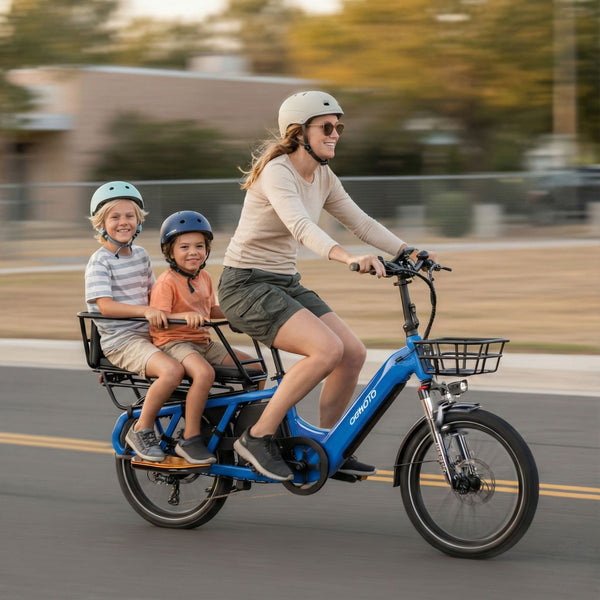
The appeal extends well beyond accessibility. Step-through e-bikes offer an upright riding posture that reduces pressure on the lower back and wrists during longer rides, translating into genuine comfort advantages on extended commutes or recreational outings. For cycling enthusiasts, this ergonomic benefit doesn't come at the cost of capability — modern step-through models incorporate the same motors, battery systems, and component groups found on traditional diamond-frame e-bikes.
However, the frame geometry does influence certain performance characteristics worth understanding before comparing models. The absence of a top tube requires manufacturers to compensate with reinforced down tubes, thicker welds, or additional frame bracing to maintain structural rigidity. This engineering response affects overall weight, which in turn influences handling and efficiency. When reviewing specifications, frame material — typically aluminum alloy or steel — becomes a meaningful data point rather than background detail. Brands like Cemotobike have leaned into this challenge by engineering aluminum step-through frames that balance structural reinforcement with weight efficiency, illustrating how thoughtful design can close the gap between open-frame and traditional geometry builds. Understanding these design fundamentals gives enthusiasts a sharper lens for evaluating how two bikes with identical motor specs might still deliver noticeably different riding experiences.
Decoding Essential E-Bike Specifications for Performance
When comparing step-through e-bikes, the specification sheet is your starting point — but knowing which numbers actually matter separates informed buyers from overwhelmed ones. Motor power, typically measured in watts, determines how much assistance the bike can deliver, but peak wattage alone tells an incomplete story. Continuous rated power reflects what the motor sustains over time, and that figure is far more relevant for real-world riding. Torque, measured in Newton-meters, governs how aggressively the motor responds when you need it most — climbing a steep incline or accelerating from a dead stop. Two bikes with identical wattage ratings can feel dramatically different if one produces 60 Nm of torque and the other delivers 80 Nm.
Weight is another specification that enthusiasts sometimes undervalue until they're hauling a bike up a flight of stairs or feeling sluggish handling at low speeds. Frame material directly drives this number — aluminum alloy step-through frames typically land between 22 and 28 pounds before components, while steel builds run heavier. Total bike weight, including the battery and motor, affects not just portability but also energy efficiency and braking distance. A lighter bike demands less from its motor to maintain speed, which extends range under comparable conditions.
Battery Capacity: Range and Longevity Insights
Battery capacity, expressed in watt-hours (Wh), is the single most discussed specification in e-bike comparisons — and for good reason. A 500 Wh pack will generally outlast a 360 Wh unit on the same route, but real-world range depends heavily on rider weight, assist level, terrain, and temperature. Cold weather can reduce effective capacity by 15–20%. When comparing models, look beyond the Wh rating to voltage and amp-hour figures, since a 48V system typically delivers more consistent power output than a 36V equivalent at similar capacities. Charge cycle ratings, usually 500–800 full cycles before noticeable degradation, indicate long-term ownership costs.
Throttle Assistance Modes and Their Impact on Ride Quality
Most step-through e-bikes offer pedal-assist (PAS) systems, throttle-only modes, or a combination of both. Pedal-assist uses cadence or torque sensors to deliver proportional power as you pedal, making it more efficient and natural-feeling over longer distances. Throttle-only mode provides on-demand power without pedaling, which proves invaluable in stop-and-go urban traffic or when fatigue sets in. Torque-sensing pedal-assist systems respond more intuitively than cadence-based alternatives, though they typically carry a higher price premium. Each mode draws differently on the battery — throttle-only use at sustained speeds drains capacity considerably faster than moderate pedal-assist, a trade-off worth calculating against your typical riding patterns.
Evaluating Performance Across Different Riding Conditions
Specifications on paper only tell part of the story — how a step-through e-bike actually performs depends heavily on where and how you ride it. Suspension setup, tire selection, and motor response characteristics interact differently depending on whether you're navigating city streets, tackling gravel paths, or climbing suburban hills. Understanding these interactions helps you prioritize the right specs for your specific riding environment rather than chasing numbers that may be irrelevant to your daily use.
Suspension is one area where riding environment creates a clear divide. Hardtail setups with front suspension forks absorb road vibration adequately for most urban and light trail use, while fully rigid frames keep weight down and improve energy transfer on smooth pavement. Tire width plays an equally decisive role — narrower tires in the 1.75–2.1 inch range roll efficiently on asphalt, whereas wider 2.4-inch knobby tires provide grip and stability on loose or uneven surfaces but increase rolling resistance on roads. Motor response characteristics matter too: hub motors deliver smooth, consistent power well-suited to flat terrain, while mid-drive motors place torque at the cranks, providing more natural handling and better weight distribution on slopes. Weather introduces another performance variable worth factoring in — wet roads demand reliable hydraulic disc brakes, and cold temperatures reduce both battery efficiency and tire traction simultaneously.
Urban vs. Recreational Riding: A Comparative Look
City commuting demands efficiency, agility, and reliability in stop-and-go conditions. Here, cadence-based pedal-assist and throttle-on-demand modes shine, allowing quick acceleration from traffic lights without excessive battery drain. A lighter frame and narrower tires minimize effort during frequent speed changes. Recreational riding shifts priorities toward comfort and sustained range — a torque-sensing assist system maintains a natural pedaling rhythm over longer distances, and wider tires absorb trail irregularities more effectively. Battery drain patterns also diverge: urban riders experience frequent power surges from repeated acceleration, while recreational cyclists draw more steadily from the pack across varied terrain.
Step Through E-Bike Model Comparison: Specs and Performance Analysis
Putting competing models side by side reveals how specification differences translate into real riding experiences. Across the current market, step-through e-bikes broadly fall into three performance tiers based on motor output and battery configuration. Entry-level models typically pair 250–350W motors with 36V battery systems, mid-range options step up to 500W motors and 48V packs, while premium builds push toward 750W continuous-rated motors with 52V high-capacity batteries. These aren't just incremental upgrades — each tier delivers meaningfully different acceleration, hill-climbing response, and sustained range under load.
Motor placement is another differentiator that spec sheets sometimes obscure. Hub-drive step-through models dominate the budget and mid-range segments, offering low maintenance and consistent flat-terrain performance. Mid-drive configurations, more common in premium builds, distribute weight centrally and leverage the bike's gearing system for efficient power delivery on varied terrain. When comparing models directly, torque figures clarify this distinction better than wattage alone — a 500W mid-drive producing 85 Nm will outclimb a 750W hub motor rated at 55 Nm on any meaningful grade.
Range claims deserve particular scrutiny during comparisons. Manufacturer estimates typically reflect optimal conditions — moderate temperatures, light rider weight, and low assist levels. A realistic range calculation should factor in your actual rider weight, preferred assist mode, and typical route elevation. Models with 48V/15Ah batteries (720 Wh) consistently outperform 36V/10Ah alternatives (360 Wh) in range tests by 30–50% under identical conditions, a gap that widens further in cold weather or hilly terrain.
| Spec Category | Budget Tier | Mid-Range Tier | Premium Tier |
| Motor Power | 250–350W | 500W | 750W |
| Battery Capacity | 360–400 Wh | 500–600 Wh | 672–840 Wh |
| Torque Output | 40–55 Nm | 60–70 Nm | 80–90 Nm |
| Assist Modes | Cadence PAS | Cadence/Torque PAS | Torque PAS + Throttle |
| Braking System | Mechanical Disc | Hydraulic Disc | Hydraulic Disc |
Case Study: High-End vs. Budget Models in Real-World Tests
Field testing between premium and budget step-through models consistently surfaces a few decisive trade-offs. On a standardized 10-mile route combining flat urban segments and a moderate 6% grade climb, premium models with torque-sensing assist and mid-drive motors completed the hill section with noticeably smoother power delivery and 12–15% less battery consumption than budget hub-drive alternatives running cadence-based assist. Budget models recovered ground on flat terrain, where their simpler drivetrains performed reliably. Among the mid-range options evaluated, Cemotobike's step-through lineup demonstrated competitive torque-sensing performance at a price point that bridges the gap between entry-level and premium tiers, making it a practical reference point for riders weighing value against capability. The practical takeaway: if your commute is predominantly flat with occasional inclines, a well-specced mid-range model delivers strong value. Riders facing consistent elevation changes will find the premium investment pays back in both performance and long-term battery preservation.
Choosing the Right Step-Through E-Bike for Your Riding Needs
Step-through e-bikes have matured into a genuinely capable category, and choosing the right model comes down to matching specifications against your actual riding demands rather than chasing the highest numbers on a spec sheet. Throughout this analysis, a few principles consistently hold true: torque output matters more than peak wattage for hill performance, battery voltage and capacity together determine real-world range far better than Wh ratings alone, and frame weight shapes the riding experience in ways that only become apparent after the first few miles.
For urban commuters prioritizing efficiency and agility, a well-specced mid-range model with cadence-based pedal-assist and hydraulic disc brakes delivers strong value without premium pricing. Riders tackling mixed terrain or consistent elevation changes will find the investment in torque-sensing assist and mid-drive motors pays dividends in both performance and battery longevity. In every case, grounding your comparison in real-world riding conditions — not manufacturer range estimates — leads to smarter decisions.
As e-bike technology continues advancing, expect lighter battery chemistries, more responsive torque sensors, and smarter assist algorithms to further close the gap between budget and premium tiers. The fundamentals covered here will remain relevant regardless of those shifts. Use this guide as your technical baseline, dig into the specific models that fit your budget, and prioritize the specifications that align with how and where you actually ride.