
Every year, home fires claim thousands of lives, and carbon monoxide — the so-called "silent killer" — sends over 50,000 Americans to emergency rooms without a single warning sign. For parents, these aren't just statistics; they're a constant, quiet fear lurking behind every closed bedroom door at night. Smoke and CO are uniquely dangerous because they can incapacitate a sleeping family before anyone realizes something is wrong.
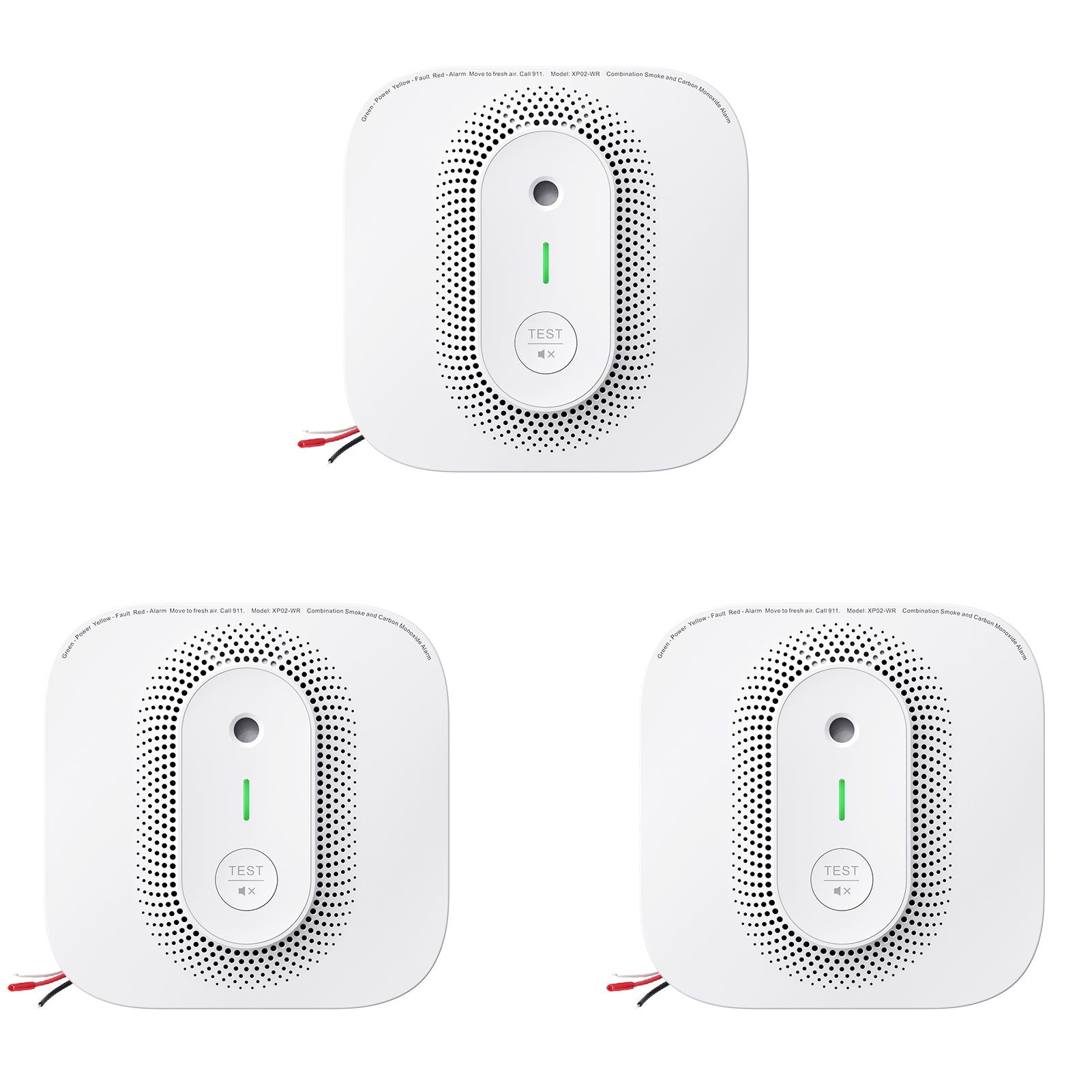
A smoke CO combo unit addresses both threats in one smart, compact device, replacing the patchwork of outdated single-purpose alarms that many households still rely on. Modern combo units go far beyond a simple beep — they connect to wireless alarm systems that cover every corner of your home and send instant app alerts directly to your smartphone, whether you're in the next room or across town. For parents who want to stay one step ahead of danger, this kind of integrated protection is no longer a luxury; it's a necessity. This article will walk you through why these devices matter, how to choose the right one, and exactly how to set up and manage a system that keeps your family safe around the clock.
The Critical Importance of Smoke and CO Detection for Family Safety
Children and the elderly are disproportionately vulnerable to both smoke inhalation and carbon monoxide poisoning. Children's smaller airways and faster respiratory rates mean they absorb toxic gases more quickly than adults, while elderly family members may sleep through early alarms or have diminished sensitivity to smell. Carbon monoxide is particularly insidious — colorless, odorless, and capable of causing confusion, unconsciousness, and death before anyone in the household even stirs. According to the CDC, CO poisoning kills roughly 400 Americans annually in non-fire-related incidents, and the U.S. Fire Administration reports that home fires cause over 2,500 deaths each year. The majority of fatal fires occur at night, precisely when families are most defenseless.
Relying on separate smoke and CO alarms creates dangerous gaps in protection. A standalone smoke alarm offers zero warning against a gas leak from a faulty furnace, and a single CO detector does nothing when flames spread from a kitchen fire. Beyond coverage gaps, managing multiple devices means staggered battery replacements, inconsistent testing schedules, and no unified alert system — all of which increase the odds of a critical failure when it matters most. A dedicated smoke and CO alarm built as a single combo unit eliminates these vulnerabilities by monitoring both threats simultaneously with one coherent system.
For parents, the emotional stakes make proactive danger alerts non-negotiable. Knowing that a single device is actively scanning for both fire and invisible gas around the clock — and can trigger an immediate, audible alarm the moment either threat appears — transforms home safety from a passive hope into an active shield. That peace of mind is exactly what modern combo detection technology is designed to deliver.
Understanding the Smoke CO Combo Unit: A Comprehensive Solution
A smoke CO combo unit is a single, integrated alarm designed to detect both smoke from fires and carbon monoxide from combustion sources — all within one compact device. Unlike traditional alarms that address only one hazard, a combo unit runs two independent detection systems in parallel, giving your household continuous, simultaneous coverage against the two most common causes of home fatalities. This isn't simply about convenience; it's about closing the dangerous gap that exists when two separate devices are managed independently, often inconsistently.
How It Works: Sensors and Detection Mechanisms
Most quality combo units pair a photoelectric smoke sensor with an electrochemical CO sensor. The photoelectric sensor uses a light beam inside a detection chamber — when smoke particles scatter that beam, the alarm triggers. This technology is especially effective at detecting slow, smoldering fires, which are the most common type in residential settings and the most likely to develop while a family sleeps. The electrochemical CO sensor works differently: it measures changes in electrical current caused by CO molecules reacting with a chemical solution, producing a reading that triggers the alarm when concentration levels reach dangerous thresholds. Response times for both sensor types are measured in seconds once hazardous levels are detected, which is critical when every moment counts.
Key Features to Look for in a Quality Combo Unit
When evaluating a smoke and CO alarm combo, several features separate a reliable device from a mediocre one. Voice alerts — where the unit announces "Warning: Carbon Monoxide" or "Fire Detected" — are far more effective at waking sleeping family members than a generic beep alone. A clearly labeled test button allows quick weekly verification without tools. Look for units certified by UL (Underwriters Laboratories), which confirms the device meets rigorous safety standards. Brands like X-Sense build their combo units with sealed, long-life lithium batteries that can eliminate the frustrating middle-of-the-night low-battery chirp, while battery backup ensures the alarm stays active during power outages. Interoperability with wireless alarm systems is equally important — a unit that can communicate with other detectors throughout your home ensures that an alert in the basement wakes everyone on the top floor simultaneously.
Leveraging Wireless Alarm Systems for Enhanced Home Monitoring
A smoke CO combo unit becomes exponentially more powerful when it operates as part of a wireless alarm system rather than as a standalone device. Traditional wired systems require professional installation, wall-penetrating cable runs, and significant upfront cost — barriers that leave many families relying on disconnected, single-room detectors. Wireless alarm systems eliminate those obstacles entirely. Each unit communicates with the others via radio frequency signals, creating a synchronized network that covers every floor, hallway, and sleeping area in your home without a single wire being run through your walls. For parents, this means whole-home protection that's genuinely practical to set up and expand over time.
One of the most significant advantages of wireless home monitoring is scalability. Starting with two or three units and adding more as your needs grow — or as your family moves to a larger home — requires no rewiring and no contractor. The network simply recognizes the new device and incorporates it into the existing alert chain. This also reduces false alarms through smarter cross-communication: when one detector senses an anomaly, it can cross-reference with nearby units before triggering a full alert, filtering out steam from a bathroom shower or brief cooking smoke while still responding instantly to a genuine emergency.
Benefits of Wireless Connectivity: Flexibility and Reliability
Wireless connectivity gives you placement freedom that wired systems simply can't match. Units can be positioned precisely where safety guidelines recommend — inside each bedroom, in hallways, near attached garages — rather than where electrical infrastructure happens to exist. Battery backup is built into every unit, which means a power outage doesn't create a protection gap during the exact moments when electrical fires are most likely to start. Critically, synchronized alerts ensure that a CO detection event in a basement utility room immediately triggers every alarm in the house simultaneously, waking every family member regardless of where they're sleeping.
Integration with Existing Home Networks and Devices
Modern wireless alarm systems are designed to slot into your existing smart home ecosystem. Many combo units support Wi-Fi, Z-Wave, or Zigbee protocols, allowing seamless communication with smart home hubs like Amazon Alexa, Google Home, or Apple HomeKit. This integration enables automated responses — your smart lights can flash on automatically when an alarm triggers, helping disoriented family members navigate safely in the dark. Z-Wave and Zigbee connections also maintain reliability in dense wireless environments where standard Wi-Fi can experience interference, ensuring your home monitoring network stays responsive precisely when it needs to be.
Managing Safety with App Alerts: A Parent's Guide
The true power of a modern smoke CO combo unit reveals itself the moment you're away from home. App alerts transform your smartphone into a real-time safety dashboard, pushing instant notifications the second a detector senses smoke or carbon monoxide — whether you're at work, running errands, or simply sleeping in another room. For parents, this means you're never truly disconnected from what's happening inside your home. Rather than hoping an alarm is loud enough to reach every corner of the house, you receive a direct, specific alert identifying which device triggered and what threat it detected, giving you the information needed to act immediately.
Setting Up Your App for Instant Notifications: Step-by-Step
Getting your app connected is straightforward. First, download the manufacturer's companion app — such as the X-Sense Home Security app — from the App Store or Google Play and create a secure account using your email address. Next, enable Bluetooth or connect your phone to your home Wi-Fi network — whichever pairing method your combo unit supports — and follow the in-app prompts to add each device by scanning its QR code or entering its serial number. Once paired, navigate to the notification settings and enable push notifications for both smoke and CO alerts. Most apps also allow SMS backup alerts, which is worth activating as a secondary layer in case your phone's internet connection drops. Finally, run a test alarm using the unit's test button and confirm the notification arrives on your phone within seconds. A response time longer than 15 seconds warrants checking your network connection or app permissions.
Customizing Alerts and Monitoring Remotely for Peace of Mind
Beyond basic notifications, quality apps offer customization that makes remote management genuinely useful. Geofencing allows the system to recognize when all family members have left the property and automatically arm enhanced monitoring mode — useful for catching issues while the house sits empty. Alert history logs give you a timestamped record of every event, including low-battery warnings and past alarm triggers, which helps identify patterns like a detector that repeatedly flags cooking smoke and may need repositioning. Sharing access with a co-parent, grandparent, or trusted neighbor takes only a few taps and ensures multiple adults receive simultaneous alerts, so someone can always respond quickly. Some platforms also support direct integration with emergency services or professional monitoring subscriptions, automatically dispatching help if an alarm goes unacknowledged within a set window — a critical safety net for families with young children or elderly members who may not be able to respond on their own.
Step-by-Step Guide to Implementing Your Smoke CO Combo Unit System
Deploying your smoke CO combo unit system correctly from the start is what separates genuine protection from a false sense of security. Before mounting a single device, map out your home's layout and identify the locations safety guidelines recommend: inside every sleeping area, outside each bedroom cluster in the hallway, on every floor including the basement, and within 10 feet of attached garages where vehicle exhaust can accumulate. Avoid placing units directly in kitchens or bathrooms — cooking steam and shower humidity trigger nuisance alarms that train families to ignore alerts, which is exactly the wrong habit to build. Once locations are marked, verify that each placement point falls within the wireless range of at least one neighboring unit to maintain a continuous network chain.
Installation Process: Optimal Placement and Mounting
Mount combo units on ceilings where possible, positioning them at least four inches from any wall. If ceiling mounting isn't practical, wall placement should sit between six and twelve inches from the ceiling — smoke and CO both rise, so low wall placement significantly delays detection. Use the included mounting bracket and hardware, securing it firmly into a stud or with appropriate drywall anchors. After mounting, insert batteries or confirm the unit is powered, then follow the wireless pairing sequence described in your device manual to connect it to the network. Confirm the indicator light shows a successful connection before moving to the next unit.
Testing, Maintenance, and Troubleshooting Common Issues
Press the test button on each unit monthly and confirm both the local alarm and any connected devices respond simultaneously — a silent neighbor unit during testing means a connectivity problem that needs immediate attention. Replace batteries annually on standard models, or every ten years on sealed lithium units. Gently vacuum the detector's exterior vents every six months to prevent dust buildup that can desensitize sensors over time. If a unit generates repeated false alarms in a specific location, reposition it at least five feet away from vents, stoves, or humidity sources before assuming the device is faulty. Most connectivity dropouts resolve by simply re-pairing the affected unit through your app.
Build a Safer Home with Integrated Smoke and CO Protection
Protecting your family from smoke and carbon monoxide doesn't require complicated systems or professional expertise — it requires the right device, correctly placed and properly managed. A smoke CO combo unit delivers simultaneous detection of both life-threatening hazards, eliminating the dangerous gaps that come with relying on separate, independently managed alarms. When that unit operates within a wireless alarm system, whole-home coverage becomes achievable for any family, regardless of home size or technical background. And when app alerts connect that system directly to your smartphone, you gain something no traditional alarm can offer: real-time awareness, wherever you happen to be.
For parents, this integrated approach transforms home safety from a passive measure into an active, responsive shield. The combination of synchronized alarms, remote notifications, and smart home compatibility means your family is protected whether everyone is asleep upstairs or you're miles away from home. The setup steps, placement guidelines, and maintenance routines outlined in this article give you everything needed to implement a system that works reliably for years to come. Don't wait for a close call to take action — invest in a quality smoke CO combo unit today, build out your wireless network, and configure your app alerts so your family's safety is never left to chance.
