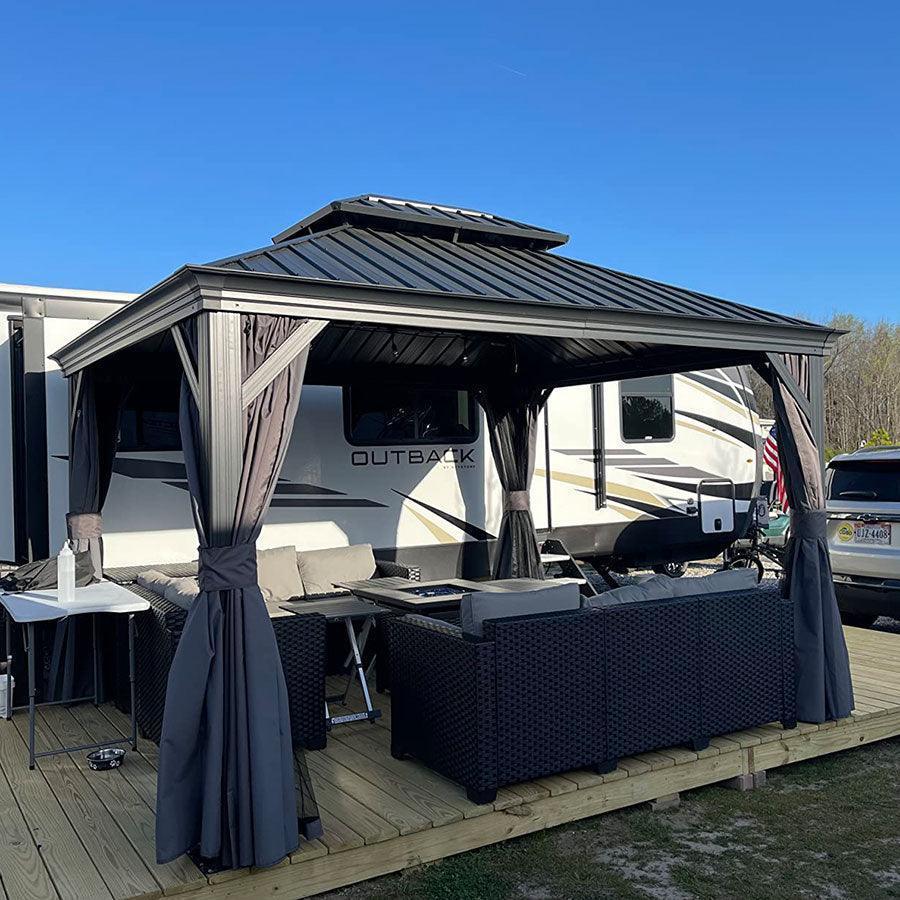
Picture this: a warm Saturday evening, a gentle breeze carrying the scent of fresh-cut grass, and you're settled into a comfortable chair beneath a sturdy, elegant structure in your own backyard. No mosquitoes buzzing in your ear, no sudden rain shower sending you scrambling indoors. This is the promise of a well-chosen gazebo—a personal outdoor retreat that extends your living space beyond four walls.
For homeowners ready to invest in this kind of backyard transformation, one question inevitably arises: hardtop or soft top? Both styles have their advocates, but the differences in longevity, weather resistance, and overall value are significant. The 10x12 gazebo has emerged as a standout option for those seeking the perfect balance between generous space and manageable footprint. It's large enough to host a dinner party or cradle a full lounge setup, yet compact enough to complement most residential yards without overwhelming them. Whether your priority is creating a comfortable relaxation zone that works through every season or ensuring reliable protection from sun, rain, and wind, understanding what separates these two gazebo types will help you make a decision you'll enjoy for years to come.
The Great Debate: Hardtop Gazebo vs. Soft Top Gazebo
A hardtop gazebo features a rigid roof made from materials like galvanized steel, aluminum, or polycarbonate panels. These solid surfaces are engineered to withstand heavy rain, snow loads, and intense UV exposure without degrading. A soft top gazebo, by contrast, relies on fabric canopies—typically polyester or canvas—stretched over a frame to provide shade and basic shelter.
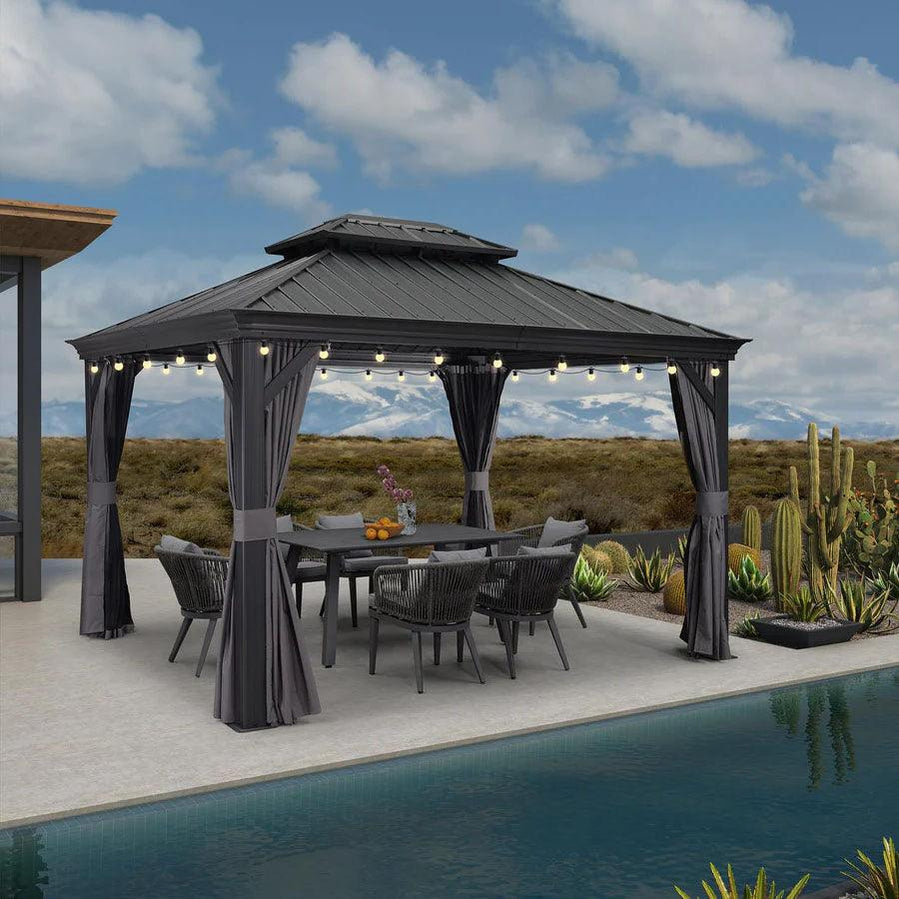
The differences between these two styles become clear over time. Hardtop models excel in durability, often lasting a decade or more with minimal upkeep. They resist tearing, fading, and sagging that plague fabric alternatives. Soft tops, however, offer easier initial setup and a lower upfront cost, making them attractive for renters or those testing the waters of outdoor living. On the downside, fabric canopies typically need replacement every two to three seasons due to weather wear, mildew, or UV breakdown. Maintenance demands increase as stitching weakens and waterproof coatings deteriorate. Aesthetically, hardtops deliver a more permanent, architectural look that blends with home exteriors, while soft tops can appear temporary or casual. When shopping for a 10x12 gazebo—one of the most popular residential sizes—both options are widely available, but the long-term value proposition tilts decisively toward the hardtop for homeowners committed to a lasting outdoor investment.
Why the 10x12 Gazebo Size is the Perfect Fit for Your Home
Choosing the right gazebo dimensions matters more than most homeowners initially realize. Too small, and you're cramped with barely enough room for a couple of chairs. Too large, and the structure dominates your yard, eating into lawn space and feeling disproportionate against your home's architecture. The 10x12 gazebo hits a sweet spot that works remarkably well for the majority of residential properties.
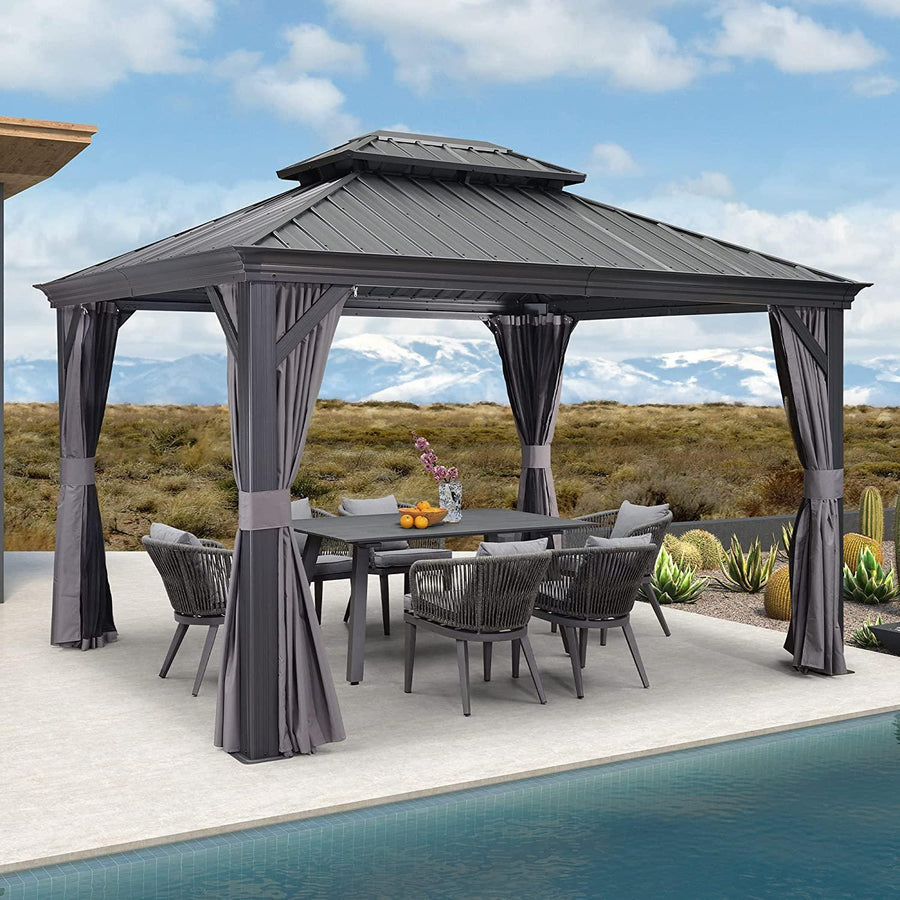
With 120 square feet of covered space, this footprint comfortably accommodates a full dining set for six, a sectional sofa arrangement, or even a combination of seating and a small bar cart. You have room to move, to breathe, to actually live beneath the roof rather than simply sit. For entertaining, it handles a casual gathering without forcing guests to spill out into uncovered areas. For quiet evenings, it feels spacious enough to avoid claustrophobia yet intimate enough to maintain a cozy atmosphere. The dimensions also align naturally with standard patio and deck proportions, meaning the gazebo integrates visually rather than looking like an afterthought. Most suburban backyards can absorb a 10x12 structure while retaining ample open green space for children, pets, or gardening. This is what transforms a simple backyard addition into a genuine outdoor retreat—a dedicated zone that feels intentional, functional, and proportionate to the life happening around it.
Building Your Dream Outdoor Retreat with a Hardtop Gazebo
A hardtop gazebo does more than simply cover your head—it fundamentally redefines how you interact with your backyard throughout the entire year. Where a soft top limits you to fair-weather enjoyment, a rigid-roofed structure invites you outside during spring showers, autumn drizzles, and even light snowfall. This year-round functionality is what transforms a gazebo from a seasonal accessory into a genuine extension of your home.
Superior UV protection ranks among the most immediate benefits homeowners notice. Solid roofing materials block harmful rays completely rather than merely filtering them through fabric, which means your skin stays protected and your outdoor furniture resists the fading and cracking that direct sunlight causes over time. During rainstorms, water sheets off a hardtop cleanly and predictably, channeled by engineered drainage paths rather than pooling in sagging fabric pockets that eventually leak through weakened seams.
Structural stability sets hardtop models apart when wind picks up. The rigid roof and reinforced frame work as a unified system, distributing force across the entire structure rather than catching gusts like a sail. This engineering means you're not rushing outside to secure flapping canopy edges or worrying about collapse during unexpected storms. From a property value perspective, a well-installed hardtop gazebo reads as a permanent architectural feature rather than temporary outdoor furniture. Real estate professionals consistently note that defined outdoor living spaces appeal to buyers and can meaningfully enhance perceived home value. The result is a comfortable outdoor space that serves you daily while simultaneously working as a long-term investment in your property.
Essential Features for Ultimate Protection: Double Roof and Mesh Curtains
Beyond the basic hardtop advantage, specific design features separate a good gazebo from one that truly delivers on the promise of all-weather outdoor living. Two elements in particular address the most common frustrations homeowners face when spending time outside: unpredictable weather and relentless insects. When these problems are solved elegantly, your 10x12 gazebo becomes a space you actually use daily rather than one you admire from inside your house.
How a Double Roof Enhances Durability and Comfort
A double roof system incorporates two layered panels with a gap between them, creating an engineered airflow channel that fundamentally changes the comfort equation beneath the structure. During hot summer months, this ventilated design allows trapped heat to escape upward through the gap rather than radiating downward onto you and your guests. The temperature difference compared to a single-layer roof is immediately noticeable—the space beneath feels genuinely cooler without requiring fans or misting systems. When rain arrives, the upper tier deflects the initial impact while the lower panel provides a secondary barrier, ensuring no moisture penetrates even during heavy downpours. Water channels cleanly off both layers through designated drainage paths. This dual-layer approach also distributes structural stress more effectively during high winds and snow accumulation, reducing the risk of damage that can compromise a single-panel roof over time. The result is a roofing system that outlasts standard designs while actively improving your comfort every time you step underneath it.
Mesh Curtains: Your Solution for Bugs and Breezes
Nothing ruins an evening outdoors faster than mosquitoes finding exposed skin or flies hovering around your dinner plate. Integrated mesh curtains transform your gazebo into a screened sanctuary that keeps insects out while preserving the open-air feeling that drew you outside in the first place. Unlike solid curtains or walls, fine mesh maintains full visibility of your surrounding landscape and allows cross-breezes to flow through naturally, so you never feel boxed in or cut off from the environment. Most quality systems operate on smooth-gliding tracks that let you open or close individual panels in seconds—pull them shut at dusk when bugs emerge, slide them open on a crisp autumn afternoon when insects aren't a concern. This flexibility means one structure adapts to conditions throughout the day and across seasons without any permanent compromise. The mesh also provides a subtle privacy layer, softening sightlines from neighboring properties without creating a fortress-like barrier. Combined with the double roof overhead, enclosed mesh curtains create a comfortable outdoor space that feels protected yet connected to nature—exactly the kind of environment that keeps you lingering outside long after the sun drops below the treeline.
Practical Steps to Choose and Set Up Your 10x12 Hardtop Gazebo
Making the right decision starts well before you browse product listings. Begin by walking your yard with a tape measure and a critical eye. Mark out a 10x12 footprint using stakes and string to visualize how the structure will sit relative to your home, fence lines, and existing landscaping. Consider orientation carefully—positioning the longer 12-foot side to face your home's back windows creates a natural visual connection between indoor and outdoor spaces, while angling it to block prevailing winds maximizes comfort during breezy evenings. Check local building codes and HOA regulations before committing, as some jurisdictions require permits for permanent structures or impose setback requirements from property lines.
When comparing models, prioritize construction materials and engineering over cosmetic details. Look for powder-coated aluminum frames that resist rust without requiring annual treatment, and galvanized steel roof panels rated for your region's snow load and wind speed expectations. Brands like PURPLE LEAF offer 10x12 hardtop gazebos with double roof designs and integrated mesh curtain track systems—features that should be non-negotiable given the ventilation and structural benefits they provide over single-panel alternatives. Verify that mesh curtains come with a track system rather than simple tie-backs, since tracks allow quick one-handed operation that you'll appreciate when juggling drinks or plates. Examine how panels connect during assembly; interlocking systems with pre-drilled holes dramatically reduce installation frustration compared to models requiring precise manual alignment.
For installation, recruit at least two helpers and dedicate a full day rather than rushing through a weekend afternoon. Anchor the gazebo to a level concrete pad or existing patio surface using the manufacturer's recommended hardware—never skip this step, as unanchored structures become dangerous in high winds regardless of their weight. If you're placing the gazebo on grass or gravel, consider pouring concrete footings at each post location for permanent stability. Once assembled, apply a thin layer of automotive wax to roof panels annually to maintain water-shedding performance, inspect mesh curtain tracks for debris each spring, and tighten all visible bolts after the first month as materials settle under their own weight. These simple maintenance habits keep your outdoor retreat performing beautifully for a decade or longer without costly repairs or premature replacement.
Why a Hardtop 10x12 Gazebo Is the Smart Long-Term Investment
The choice between a hardtop and soft top gazebo ultimately comes down to what you expect from your outdoor space—not just this summer, but five or ten years from now. A hardtop gazebo delivers on every front that matters to homeowners seeking lasting value: structural resilience against wind, rain, and snow; complete UV protection that preserves both your comfort and your furniture; and an architectural presence that elevates your property rather than cluttering it. The 10x12 size strikes that rare balance where generous living space meets practical yard proportions, giving you room to entertain, dine, or simply unwind without sacrificing your garden or overwhelming your home's exterior.
Features like a double roof system and integrated mesh curtains address the specific frustrations—heat buildup, sudden downpours, relentless insects—that typically drive people back indoors. Together, they create an outdoor retreat that functions comfortably from early spring through late autumn, and even into winter in milder climates. A soft top might cost less today, but the recurring replacements, weather limitations, and maintenance headaches erode that savings quickly. Investing in a quality hardtop gazebo is investing in how you live every day—expanding your usable space, enhancing your home's appeal, and giving yourself a reason to step outside no matter what the forecast holds.