
Between monthly membership fees, crowded peak hours, and the commute that eats into your schedule, traditional gyms often create more barriers than they remove. For many fitness enthusiasts, the math simply doesn't add up—spending hundreds of dollars annually for equipment you have to share and hours lost in transit. That's where a small at home gym changes everything. By carving out a dedicated fitness hub in your own space, you gain unrestricted access to workouts on your terms, without the recurring costs or time constraints that hold so many people back. Whether you're living in a compact apartment or working with a tight budget, today's equipment options make it entirely possible to build a versatile workout station that rivals what commercial facilities offer. This guide walks you through everything you need to know—from selecting essential equipment like adjustable barbells to designing routines that keep you progressing. It's time to stop waiting for the perfect gym conditions and start creating them right where you live.
The Foundation: Why a Small at Home Gym is Essential for Modern Fitness
The shift toward home-based fitness isn't a passing trend—it's a fundamental change in how people approach their health. Over the past several years, millions have discovered that effective training doesn't require a 20,000-square-foot facility packed with machines. What it requires is intention, consistency, and the right tools within arm's reach. A small at home gym delivers exactly that, transforming even the most modest corner of your living space into a fully functional fitness hub.
The advantages extend far beyond skipping the commute. When your workout station sits ten steps from your bedroom, excuses evaporate. There's no waiting for equipment during rush hour, no self-consciousness under fluorescent lights, and no schedule dictated by someone else's operating hours. You train when energy peaks—whether that's 5 AM before the household wakes or 10 PM after the kids are asleep. This privacy factor alone keeps many people more consistent than any gym membership ever could.
A versatile workout space at home also adapts to your life rather than demanding you adapt to it. Feeling strong? Load up the barbell. Short on time? Hit a quick resistance band circuit. Recovering from an injury? Roll out the mat for mobility work. This flexibility means your training evolves alongside your body and goals instead of being limited by whatever class happens to be on the schedule. For anyone serious about long-term fitness without long-term financial drain, building a dedicated space at home isn't just convenient—it's strategic.
Overcoming Space and Budget Constraints
Limited square footage doesn't have to limit your results. Start by identifying underused areas—a garage corner, a section of your bedroom, or even a cleared-out closet can serve as your training zone. Wall-mounted racks and foldable benches free up floor space when you're not training, while vertical storage solutions keep weights organized without sprawling across the room. Measure your available area first, then select equipment that fits rather than forcing oversized gear into tight quarters.
On the budget side, prioritize multi-functional pieces over single-purpose machines. An adjustable barbell replaces an entire rack of fixed-weight options. Resistance bands costing under thirty dollars can replicate dozens of cable machine exercises. Buy quality essentials first and expand gradually—one well-chosen piece per month builds a comprehensive setup within a year without straining your finances. Check local marketplaces for lightly used equipment, as many people sell barely-touched gear at significant discounts after abandoning their own fitness goals.
Core Home Gym Equipment for a Complete Fitness System
Building a complete fitness system at home doesn't require filling a room wall-to-wall with machinery. It requires choosing pieces that work together to target every movement pattern your body needs—pushing, pulling, squatting, hinging, and carrying. The right combination of a few strategic tools covers the full spectrum of strength training, cardiovascular conditioning, and mobility work without redundancy or wasted space.
An adjustable barbell stands as the centerpiece of any serious home setup. This single piece of equipment opens the door to hundreds of exercises—from deadlifts and squats to overhead presses and bent-over rows—making it the most versatile investment you can make. Pair it with a set of adjustable dumbbells, and you've covered both bilateral and unilateral movements, addressing muscle imbalances that barbells alone can miss. Together, these two tools replicate the majority of what a fully stocked weight room provides.
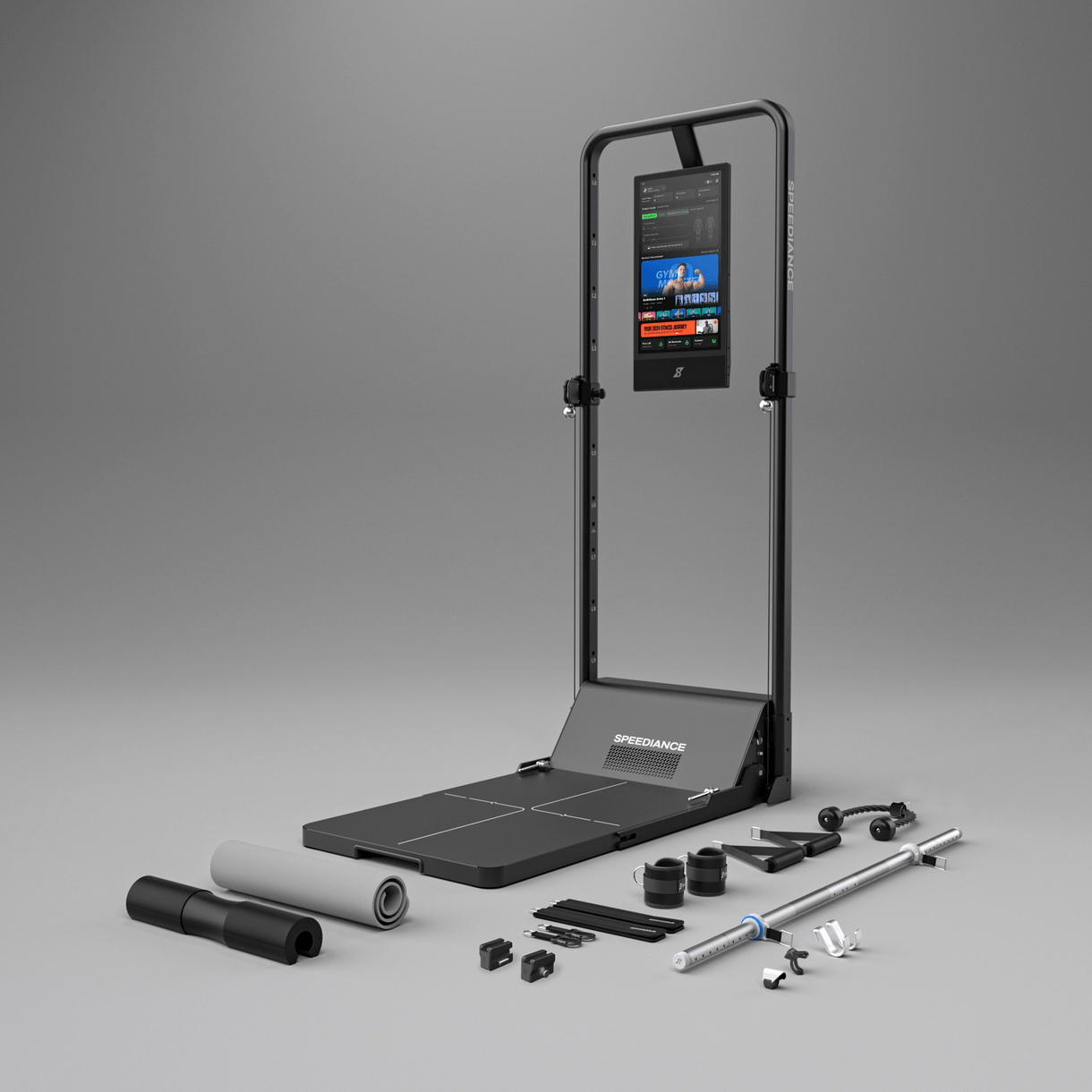
Beyond free weights, resistance bands deserve a permanent spot in your fitness hub. They add accommodating resistance to barbell lifts, serve as standalone tools for joint-friendly isolation work, and assist with stretching and warm-up protocols. A quality exercise mat protects your flooring and joints during floor-based movements, core work, and yoga sessions. If space permits, a flat-to-incline bench dramatically expands your exercise library by introducing angle variations for chest presses, seated curls, and supported rows. For those seeking an all-in-one solution, smart home gym systems from brands like Speediance combine multiple cable-based exercises into a single compact unit, offering digital resistance and guided training that can complement your free weight setup. Finally, a pull-up bar—whether door-mounted or wall-fixed—rounds out the system by providing the vertical pulling stimulus that no other affordable home equipment replicates effectively. Each piece earns its place by serving multiple purposes, ensuring your complete fitness system remains compact yet capable of delivering progressive, full-body results for years.
Spotlight on the Adjustable Barbell: Your Ultimate Workout Tool
An adjustable barbell eliminates the need for multiple fixed-weight bars by allowing you to load and unload plates as needed, making it the most space-efficient strength tool available. Instead of dedicating an entire rack to barbells of varying weights, you store one bar and a compact plate set that serves every exercise from light Romanian deadlifts to heavy back squats. When selecting yours, prioritize a bar with knurling that suits your grip preference and a weight capacity that accommodates your long-term strength goals—not just where you are today. Start each session by choosing compound movements first, loading progressively heavier as your warm-up sets build toward working weight. Track your loads in a simple notebook or phone app so you can apply progressive overload systematically. This single tool, used intentionally, becomes the backbone of a training program that grows with you indefinitely.
Designing Your Versatile Workout Routine Without a Gym Membership
Owning the equipment is only half the equation—knowing how to use it strategically transforms a collection of gear into a genuine training program. The beauty of a small at home gym lies in the freedom to design workouts that match your energy, schedule, and goals on any given day, without being locked into a rigid class format or waiting for machines to free up. A versatile workout routine built around your home equipment should rotate through three primary training modalities: strength, cardiovascular conditioning, and flexibility work.
For strength days, anchor your sessions around compound barbell movements—squats, deadlifts, overhead presses, and rows—then supplement with dumbbell accessories that target smaller muscle groups. Three to four strength sessions per week, alternating between upper and lower body focus, creates enough stimulus for growth while allowing adequate recovery. Cardiovascular conditioning doesn't demand a treadmill or stationary bike. Barbell complexes—where you perform multiple movements back-to-back without releasing the bar—drive your heart rate through the roof in under fifteen minutes. Combine these with resistance band circuits or bodyweight intervals like burpees and mountain climbers for variety that prevents staleness. Dedicate two days weekly to flexibility and active recovery, using your mat for dynamic stretching sequences, foam rolling, and controlled mobility drills that keep joints healthy and movement quality high. The key to sustaining a versatile workout approach is cycling intensity throughout the week—hard days followed by lighter ones—so your body adapts without breaking down. Rotate exercise selections every four to six weeks to challenge different movement patterns and prevent plateaus from settling in.
Step-by-Step Guide to Building a Balanced Fitness Plan
Start by defining one clear primary goal—whether that's building muscle, losing fat, or improving endurance—because this determines how you distribute training volume across the week. Next, select six to eight exercises that cover all major movement patterns: a squat variation, a hip hinge, a horizontal push, a horizontal pull, a vertical push, and a vertical pull. Schedule four to five training days with specific focuses, leaving at least one full rest day. Within each session, arrange exercises from most demanding to least demanding so fatigue doesn't compromise form on heavy compound lifts. Track every session by recording weights used, sets completed, and how the effort felt. Review your log every two weeks and increase load or volume by small increments when prescribed reps become manageable. Finally, reassess your plan monthly—adjust exercise selection, rep ranges, or training frequency based on what the data tells you rather than guessing.
Maximizing Your Small at Home Gym Hub for Long-Term Success
Building your fitness hub is just the beginning—maintaining momentum over months and years requires deliberate strategies that keep both your equipment and motivation in peak condition. Start with a simple maintenance routine: wipe down your barbell and dumbbells weekly to prevent rust, check collar tightness before heavy lifts, and inspect resistance bands for small tears that could lead to snapping mid-exercise. These small habits protect your investment and keep your training safe.
Motivation naturally fluctuates, so build systems that don't rely on willpower alone. Set your workout clothes out the night before. Create a dedicated playlist that signals training time. Establish a non-negotiable minimum—even on low-energy days, commit to ten minutes of movement. Once you start, momentum almost always carries you through a full session. Tracking visible progress through photos, strength logs, or measurement records provides concrete evidence that your home setup delivers real results, reinforcing the habit loop when enthusiasm dips.
As your fitness evolves, your gym should evolve with it. Every six months, evaluate whether your current equipment still challenges you. Perhaps your adjustable barbell needs heavier plates, or your training has shifted toward conditioning work that benefits from a jump rope or kettlebell addition. Treat your fitness hub as a living system rather than a static collection—one thoughtful upgrade per quarter keeps your environment aligned with your growing capabilities. The home gym that served you as a beginner should look noticeably different two years later, reflecting the stronger, more capable person you've become through consistent effort in your own space.
Build Your Fitness Freedom One Rep at a Time
A small at home gym isn't just a convenience—it's a long-term investment in your health, time, and financial freedom. By choosing versatile, multi-functional equipment like an adjustable barbell, resistance bands, and a quality bench, you create a complete fitness system that rivals commercial facilities without the recurring costs or scheduling headaches. The key lies in being intentional: select gear that serves multiple purposes, design routines that rotate through strength, conditioning, and flexibility, and treat your space as an evolving fitness hub that grows alongside your capabilities. You don't need a massive room or an unlimited budget to train effectively—you need a clear plan and the discipline to show up consistently in whatever space you've claimed as your own. Start with one foundational piece, build a routine around it, and expand as your strength and confidence grow. The perfect gym isn't somewhere across town waiting for you to arrive. It's the one you build, step by step, right where you are. Your potential isn't locked behind a membership card—it's waiting in the next rep you decide to take.