
A lymphatic drainage machine lets a spa sell drainage sessions without booking a therapist for every hour of them. That's the whole business case, and it's worth looking at with real numbers before you buy anything. In US spas a 60-minute manual lymphatic drainage session usually costs the client $100 to $150, and specialist clinics in big cities charge more. The price reflects skilled labor, and skilled labor is the part of your schedule you can't stretch.
Manual lymphatic drainage, the Vodder method and its variations, works with light, slow, repetitive strokes. Good therapists are hard to hire, and even the best of them can't do eight hours of it a day without their hands and shoulders paying for it. Most studios we talk to cap a therapist at five or six drainage hours a day and fill the rest with other treatments. When a post-op client wants ten sessions in two weeks, or a bride wants three sessions the week before the wedding, the calendar fills up fast.
Manual work still has a place. Post-surgical drainage after liposuction or abdominoplasty, lymphedema care and anything a doctor prescribes belong with a certified therapist, and we tell operators so. A machine covers the much larger group of wellness clients who want lighter legs, less puffiness and smoother skin, and who don't need a clinician's hands to get there.
How a Lymphatic Roller Machine Covers the Gap
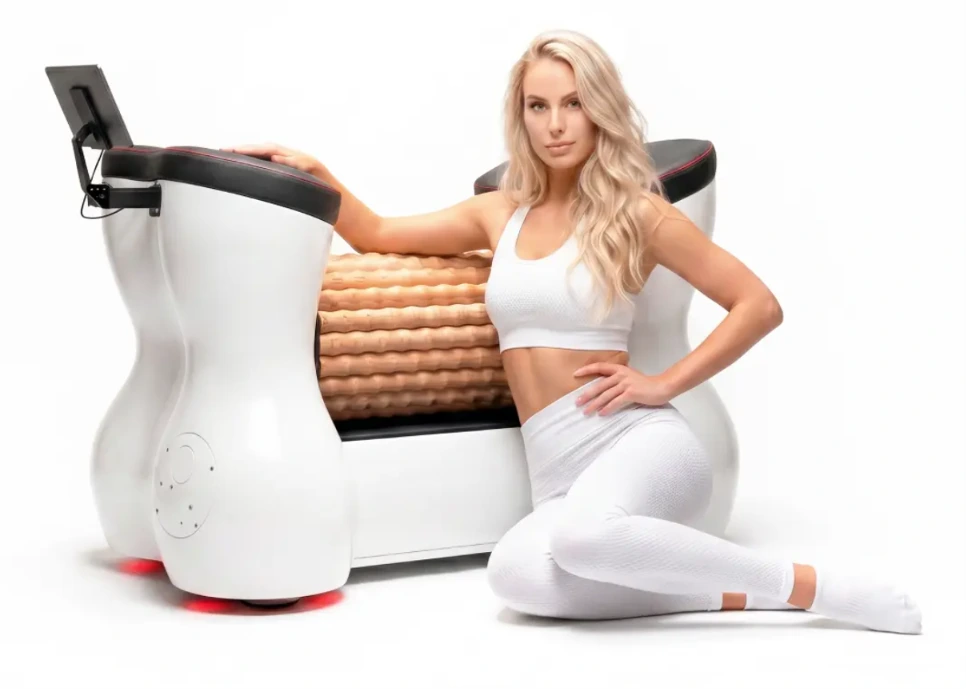
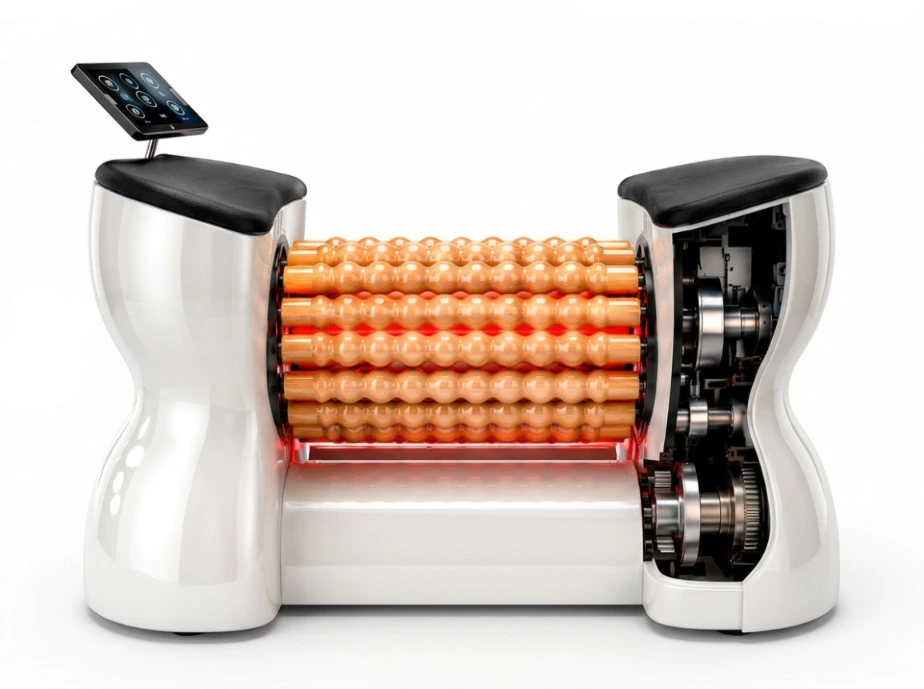
A floor-standing roller unit replaces the therapist's strokes with a rotating drum of profiled rollers. On the RollStar lymphatic drainage machine the rollers are natural ash wood, the rotation direction and speed are programmable, and infrared emitters warm the tissue to about 45°C (113°F) during the session. The client sits, kneels or leans against the drum to work thighs, glutes, abdomen or arms. A staff member spends a few minutes on setup and program choice, then leaves the room.
Pressotherapy is the other machine option, and plenty of spas already run Ballancer or similar compression suits. Cuffs squeeze in sequence and move fluid well, but the client lies still for 30 to 45 minutes and there's no heat, no massage feel and no skin-tone work. A roller adds mechanical stimulation of the skin and infrared warmth, which is why many studios end up offering both.
Capacity and Pricing: A Simple Example
Most owners run this arithmetic on a napkin first. A therapist doing manual drainage produces five or six billable hours a day. A body roller machine can run back-to-back 30-minute sessions from opening to closing, with one front-desk person handling check-in for it and everything else. The numbers below are an illustration, and you should plug in your own local prices.
| Manual drainage | Roller machine | |
|---|---|---|
| Typical session | 60 min | 30 min |
| Client price (example) | $120 | $45 |
| Sessions per day (realistic) | 5 | 10 |
| Staff time per session | 60 min | 5 min |
| Consumables | Oils, linens | Seat cover, cleaning |
The machine session is cheaper for the client, and that opens a market that won't pay $120 twice a week. Packages of 10 or 12 sessions sell well at that price point, and they give you predictable repeat visits. Clients watch Netflix or YouTube on the 10.1-inch screen, so a half hour of passive treatment doesn't feel like waiting.
Space, Power and Setup
You'll need about 1.4 by 1 meters of floor for the unit plus room for the chair, a standard outlet on a 20 A circuit (230V or 120V versions) and a room with a door, since clients change into fitted sportswear. Noise sits at 42 to 48 dB, quiet enough for a spa corridor. Many owners start with one unit in a spare treatment room, watch bookings for three months and then decide on a second.
If you already have manual therapists, keep them on the clinical and post-op work and move routine wellness drainage onto the machine. If you're opening a contouring studio from scratch, a roller unit gives you a drainage service on day one without hiring. Specs, photos and a quote form are on the bodyroller.co, and our team can talk through which roller configuration fits your space.