
Squinting has become such an automatic reflex that most people stop noticing they do it. You walk out of a building at midday, your eyes tighten, your forehead creases, and an hour later there is a dull ache behind your temples that you blame on the coffee you skipped. Sunglasses help, obviously. But if you have ever worn a deeply tinted pair beside a lake or on a wet highway and still ended up shading your eyes with one hand, you have bumped into the ceiling of what tint alone can do. Darkness reduces how much light reaches you. It does nothing about the particular kind of light that bounces off flat surfaces and floods your field of view with bright, structureless noise. That is the problem polarization was designed to solve, and it explains why two pairs that look nearly identical on a display rack can feel entirely different once you are standing in open sun. Understanding the distinction makes the decision far less murky than most product marketing suggests.
What Glare Really Is, and Why Darker Lenses Miss It
Sunlight leaves its source vibrating in every orientation at once, which is why an ordinary tinted lens treats it as a single undifferentiated flood and simply dims the whole thing. Something changes when that light strikes a smooth surface. Water, wet asphalt, car hoods, glass storefronts, snowfields, even a polished conference table near a window all reflect light in a way that organizes it. The reflected rays come back mostly aligned along one plane, usually horizontal, and that concentrated horizontal light is what we experience as glare. It does not just feel bright. It actively erases detail, washing out the texture of the road ahead or the shape of a fish below the surface.
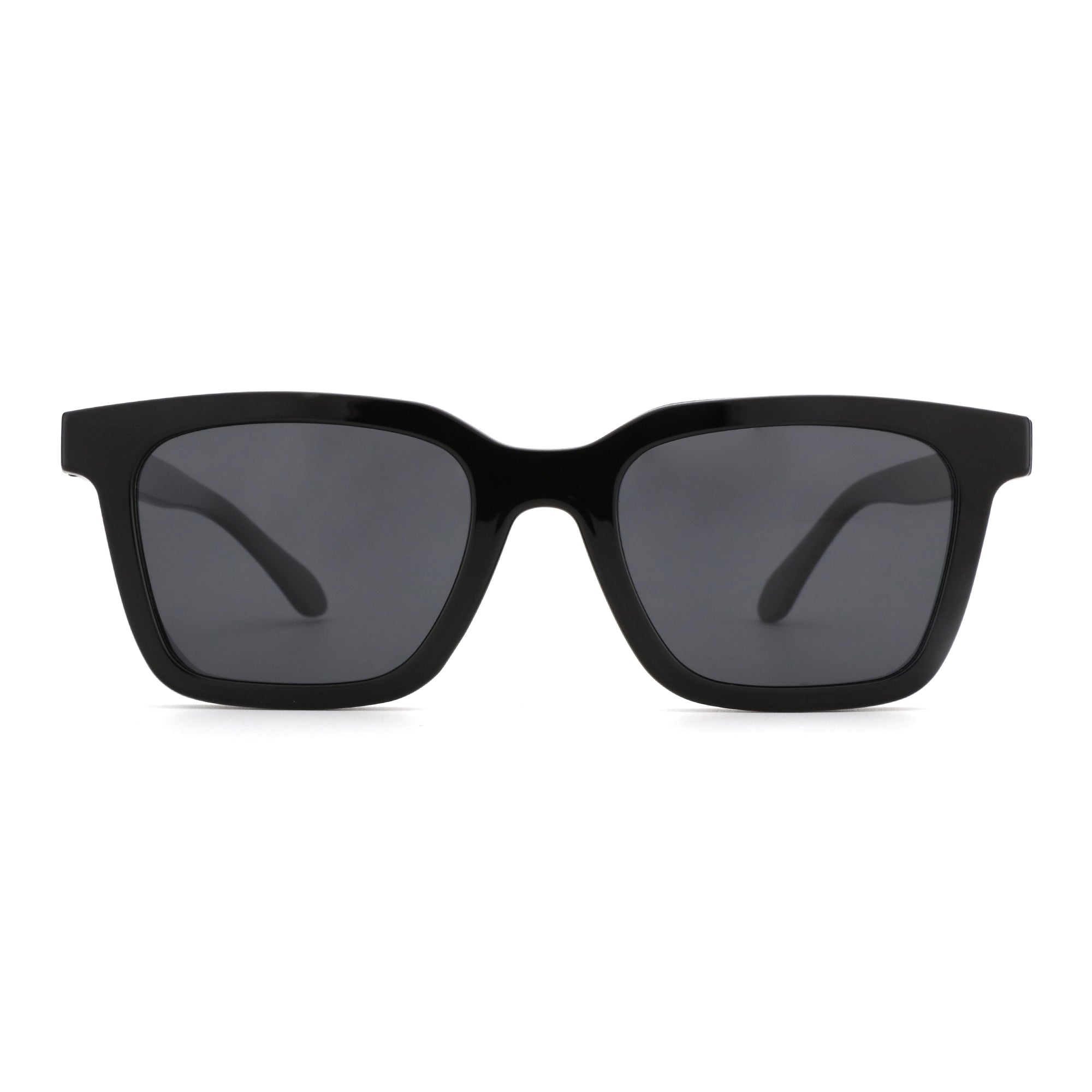
A darker tint dims glare and useful light in equal measure, so the annoyance shrinks but never disappears, and you lose visual information in the trade. This is the gap that Polarized Sunglasses address through a different mechanism entirely. Rather than dimming everything, the lens filters selectively, blocking the aligned horizontal light while letting the rest pass through largely untouched. The result reads as calmer rather than merely darker, and the detail that glare had been hiding comes back.
The Physics Behind the Filter
Inside a polarized lens sits a film with its molecules stretched into parallel rows, forming something like a microscopic set of vertical blinds. Light oscillating vertically slips between the rows. Light oscillating horizontally, which is the bulk of reflected glare, gets absorbed. The effect is mechanical rather than cosmetic, and it does not depend on how dark the lens looks. A pale amber lens can be strongly polarized, and an almost opaque grey one may not be polarized at all. That decoupling of darkness from glare control is the single most useful thing to understand, because it is precisely the assumption that shoppers get wrong when they judge a lens by holding it up to a window and seeing how much the room dims.
Where the Difference Actually Shows Up
The change is easiest to notice in situations where a flat surface sits between you and whatever you are trying to see. Driving is the clearest example. Late afternoon sun hitting a windshield or a stretch of damp pavement creates a sheet of white that hides lane markings, potholes, and the brake lights two cars ahead. Filter that sheet out and the road regains its texture. Drivers often describe the sensation as the scene sharpening, though nothing has been sharpened at all; the interference was simply removed.
Anyone who spends time near water encounters an even more dramatic version. The surface of a lake behaves like a mirror tilted at exactly the wrong angle, throwing back a bright skin that makes the water look opaque. Anglers rely on polarization for this reason alone, since seeing structure, weed lines, and movement below the surface is the difference between casting blind and casting with purpose. The same principle helps on a boat deck, at the beach, or paddling a river where reading the water matters for safety.
The Quieter Everyday Benefit
Dramatic scenarios get the attention, but the accumulated effect over ordinary days may matter more. Your eyes respond to glare by constricting the pupil and tensing the small muscles around the socket, and holding that posture for hours produces the fatigue people describe vaguely as feeling worn out after being outside. Cutting the glare source removes the reason for the tension. Long drives feel shorter. An afternoon at a kid's soccer game does not end with a headache. Runners and cyclists notice they are no longer fighting the pavement's shine on every sunlit block.
Snow deserves specific mention because it combines the two problems. Fresh snow reflects an enormous share of the light that hits it, and much of that reflection arrives polarized. Skiers dealing with flat light struggle to read the terrain in front of them, and a lens that suppresses the reflected component while preserving contrast makes bumps and dips legible again.
City environments produce their own version of the problem, which surprises people who associate glare with open landscapes. Glass towers, parked cars, and rain-slicked crosswalks turn a downtown block into a grid of angled mirrors, each one throwing reflected light from a slightly different direction. The effect is less like a single bright sheet and more like constant low-level visual static, easy to dismiss and genuinely tiring over a full day of walking or commuting. Filtering it out tends to register not as a dramatic improvement but as an absence of something you had stopped consciously registering in the first place.
Choosing a Pair Without Guessing
Since darkness tells you nothing about polarization, you need a different test. The simplest one takes ten seconds at the counter: hold the lens up to an LCD screen, a phone or a register display works fine, then rotate it. A polarized lens will visibly darken or go nearly black at one point in the rotation, because the screen already emits polarized light and you are crossing two filters. No change means no polarization, regardless of what the label claims.
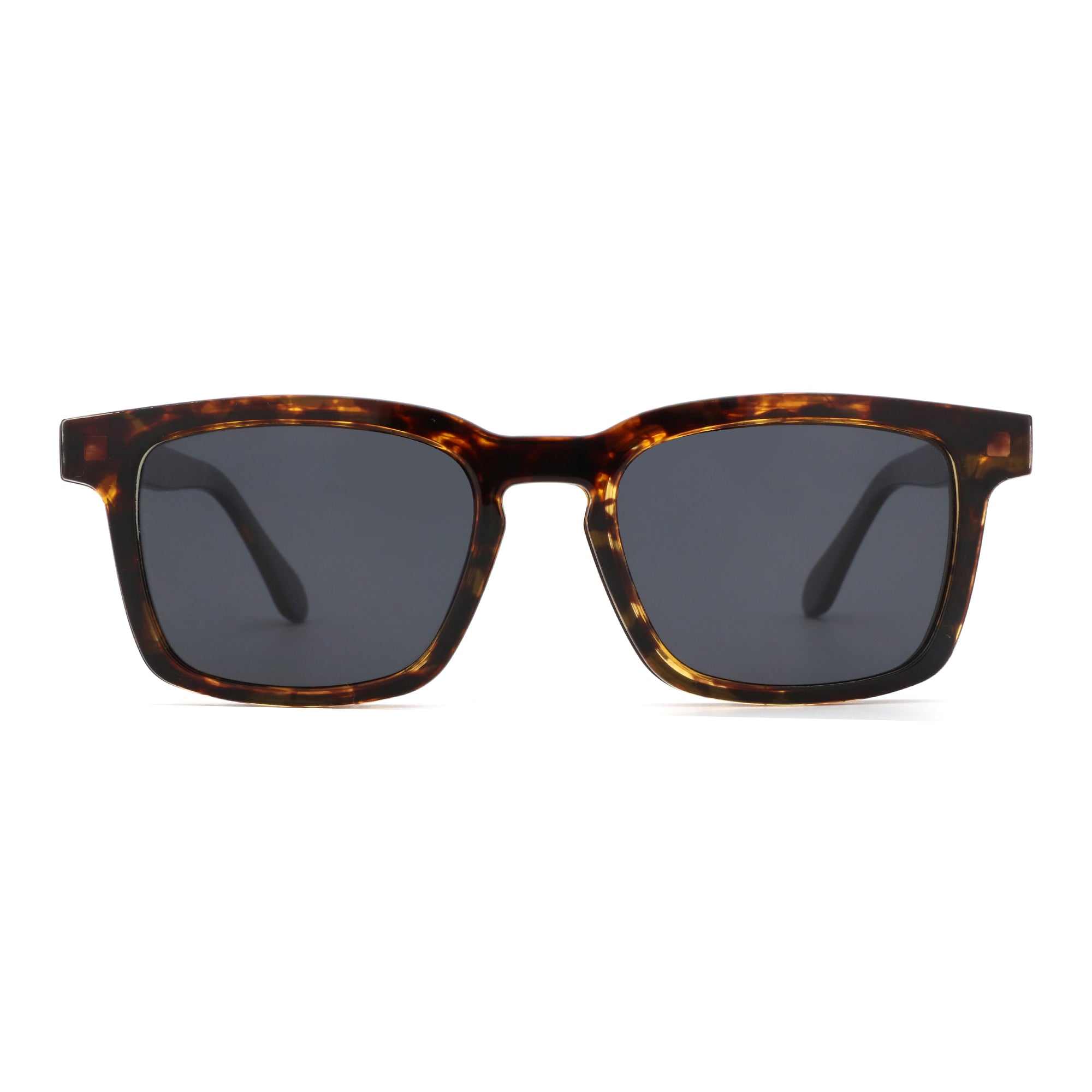
Tint color is a separate decision from polarization and worth treating as such. Grey preserves colors as your eye normally sees them and suits bright, open conditions. Brown and amber lift contrast, which many drivers and anglers prefer because it makes edges and depth read more clearly. Green splits the difference. Beyond that, fit does more work than most people expect. A frame that sits close to the face and wraps slightly blocks the light sneaking in from the sides and above, and light arriving around a lens is light the lens cannot filter. Brands that build across a range of face shapes, ZENOTTIC among them, tend to make this easier because the frame geometry is treated as part of the optical performance rather than an afterthought.
One more thing worth confirming: polarization and ultraviolet protection are unrelated features that often travel together but do not have to. Ultraviolet blocking is the health-critical one, guarding against cumulative damage to the lens and retina, and it should be full spectrum regardless of anything else. Polarization is a comfort and clarity feature. Buy for both deliberately instead of assuming one implies the other.
When Polarization Is the Wrong Choice
Honest assessment means naming the cases where it works against you. Because polarized lenses interact with LCD displays, screens can dim or shift oddly when viewed through them. That is a minor irritation with a phone and a genuine problem with a cockpit instrument panel or some marine electronics, which is why many pilots avoid polarization outright. Drivers of vehicles with heads-up displays sometimes run into the same conflict.
Ice presents a subtler risk. Part of how you spot a patch of black ice is the telltale sheen it throws back, and a lens that removes reflected light can remove that warning signal along with the glare. Winter drivers and cyclists should know this rather than discover it. There is also a small population who find the effect disorienting at first, particularly people sensitive to how polarization sometimes reveals faint stress patterns in tempered glass such as car windows. Most adjust within days, but if the sensation persists, a high quality non-polarized lens is a legitimate alternative rather than a compromise.
Seeing Clearly Beats Simply Seeing Less
The question this whole comparison turns on is not how much light a lens removes but which light it removes. A dark tint treats every ray the same and hands you a dimmer version of the same washed-out scene. A polarizing filter targets the organized, reflected light that was destroying detail in the first place, which is why the world looks less like it has been turned down and more like something has been lifted off it. That distinction is worth carrying into a store, because it replaces guesswork with a ten-second rotation test and a clear-eyed read on tint and fit. Know the exceptions too. Screens, instrument panels, and the warning sheen of black ice are real limitations rather than fine print. For nearly everything else, from the commute home into a low sun to a long afternoon on the water, filtering glare rather than merely muting brightness is the change that people notice immediately and rarely give up once they have felt it.