
For engineers navigating today's competitive manufacturing landscape, maintaining production stability is one of the most persistent and consequential challenges. Fluctuations in quality, unexpected downtime, and integration failures can derail timelines and erode margins—problems that intensify as products grow more complex and markets demand faster turnaround. In this environment, China has emerged as a critical hub for injection molding suppliers, offering far more than cost-effective production. Leading Chinese suppliers now serve as end-to-end partners, bringing together advanced mold design, custom automation systems, and even PCBA design capabilities under one roof. This convergence of expertise allows engineers to address multiple pain points simultaneously, from achieving repeatable process stability to integrating automation that scales with evolving project demands. This article explores how partnering with injection molding supplier China can help engineers solve core manufacturing challenges. We'll examine the specific advantages these suppliers bring, walk through practical strategies for automation integration and mold design optimization, and outline actionable steps for building the kind of stable, predictable production environment that drives long-term success.
Why China Injection Molding Suppliers Are Key to Global Manufacturing
China's injection molding industry operates at a scale unmatched anywhere in the world. With thousands of specialized suppliers, a deeply developed supply chain for resins and tooling steel, and a workforce trained across decades of high-volume production, the country has built an ecosystem that delivers both capacity and technical depth. For engineers evaluating potential manufacturing partners, this concentration of expertise translates into tangible advantages: shorter lead times for complex molds, access to a broad range of engineering-grade materials, and cost structures that remain competitive even as quality standards rise to meet global benchmarks.
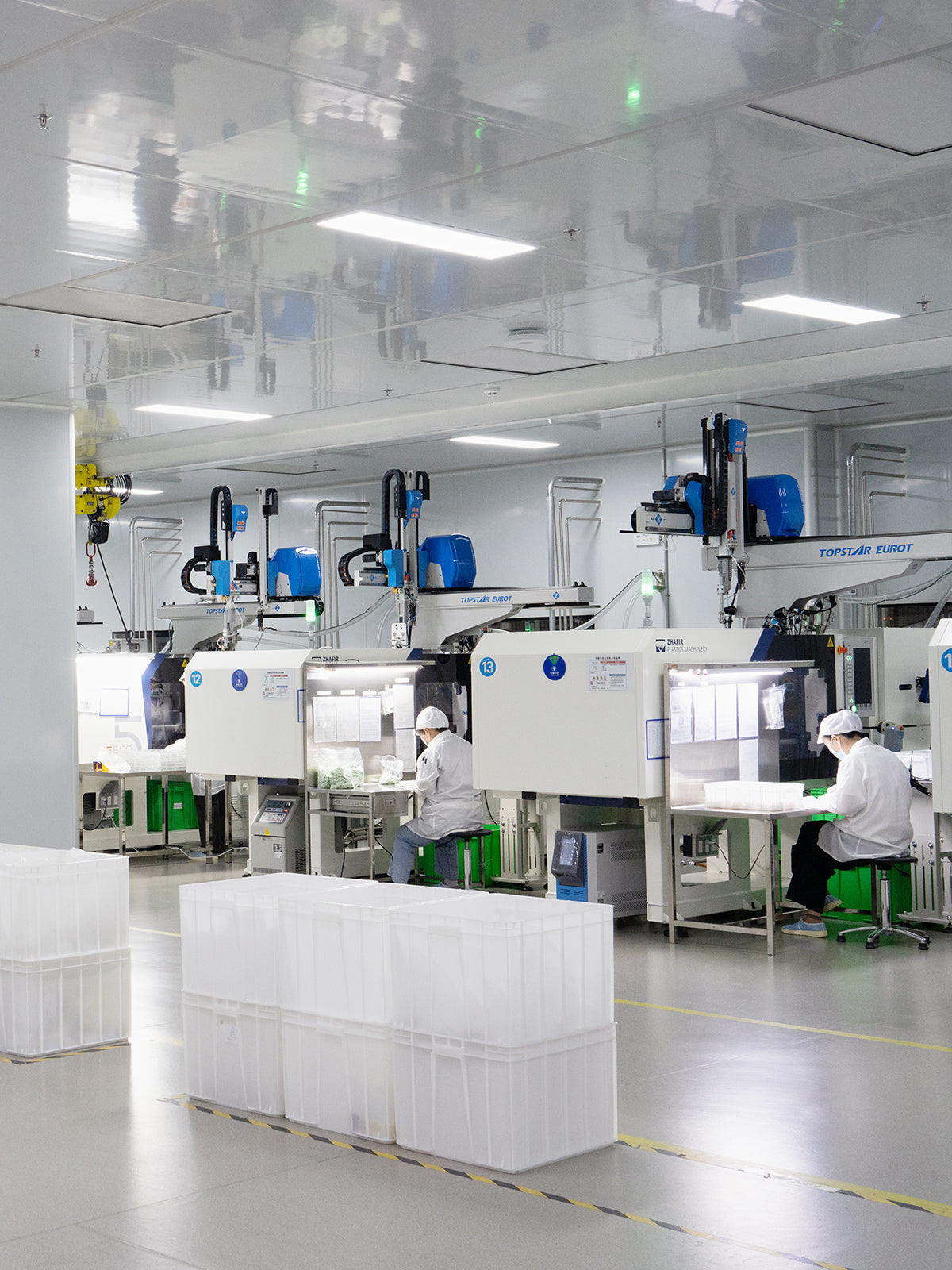
What makes these suppliers particularly relevant today is their evolution beyond basic contract manufacturing. Many now invest heavily in in-house R&D, advanced simulation software, and integrated automation capabilities—resources that allow them to function as collaborative engineering partners rather than simple vendors. This shift matters for teams focused on manufacturing stability, because a supplier who understands both the molding process and the broader production workflow can anticipate issues before they become costly disruptions. When automation projects require tight coordination between mold tooling, robotic handling, and downstream assembly, having a partner with cross-functional expertise reduces integration risk and accelerates time to stable, repeatable output.
Integrating Custom Automation Solutions for Enhanced Efficiency
Custom automation has become a defining factor in whether a manufacturing operation can deliver consistent output at scale. For engineers working with injection molded components, off-the-shelf automation rarely addresses the specific handling, inspection, or assembly requirements that complex parts demand. A robotic arm designed for generic pick-and-place tasks, for example, may struggle with thin-walled parts prone to warping or multi-cavity molds producing components that require orientation-specific downstream processing. This is where China injection molding suppliers have carved out a distinct advantage—many now maintain dedicated automation engineering teams capable of designing, building, and commissioning systems tailored to the exact geometry, cycle time, and quality specifications of a given project.
These suppliers approach automation not as an afterthought but as an integral layer of the molding process itself. By designing the mold tooling and the automation system in parallel, they can ensure that end-of-arm tooling matches part geometry precisely, that conveyor speeds align with cooling times, and that vision inspection systems are calibrated to catch the specific defect modes most likely to occur with a given resin and wall thickness. This concurrent engineering approach eliminates the integration gaps that typically arise when mold builders and automation integrators operate independently, reducing commissioning time and minimizing the trial-and-error phase that destabilizes early production runs.
Steps to Successfully Implement Custom Automation with a Supplier
Successful implementation begins with a thorough assessment of your project's throughput targets, part complexity, and quality thresholds—shared transparently with the supplier during the quoting phase. From there, collaborative design sessions should map out the entire cell layout, including mold ejection sequences, part handling paths, and inspection checkpoints. Prototype runs using pilot tooling allow both teams to validate cycle times and identify failure modes before committing to production-scale equipment. Once validated, a phased scale-up with clearly defined acceptance criteria at each stage ensures that automation performance remains stable as volumes increase, giving engineers confidence in long-term repeatability.
Advanced Mold Design: Ensuring Precision and Quality
Mold design is the foundation upon which every injection molding project succeeds or fails. Even the most sophisticated automation cell cannot compensate for a poorly designed mold that produces parts with inconsistent dimensions, sink marks, or flash. For engineers focused on manufacturing stability, the mold itself represents the single largest variable in achieving repeatable output—and this is an area where experienced China injection molding suppliers deliver exceptional value. Suppliers such as WEILAN MFG, with decades of high-volume tooling work across industries ranging from automotive to medical devices, have produced a deep bench of mold designers who understand not just how to cut steel, but how material flow, cooling dynamics, and ejection forces interact to determine final part quality.
Leading Chinese suppliers now employ advanced simulation tools such as Moldflow analysis during the design phase, allowing engineers to visualize fill patterns, predict weld line locations, and optimize gate placement before any steel is cut. This front-loaded approach catches potential defect modes early, when design changes cost hours rather than weeks. Material selection plays an equally critical role—suppliers with broad experience can guide engineers toward the right tooling steel grades based on expected production volumes, resin abrasiveness, and dimensional tolerance requirements, ensuring that the mold maintains its precision across hundreds of thousands of cycles rather than degrading prematurely.
Prototyping capabilities further de-risk the process. Many suppliers offer soft tooling or rapid prototype molds that allow engineers to validate part geometry, test fit and function, and confirm that critical dimensions hold before investing in hardened production tooling. This iterative validation loop directly supports manufacturing stability by ensuring that when full-scale production begins, the mold has already been proven under realistic conditions. The result is fewer surprises during ramp-up, shorter time to steady-state production, and a tooling asset that delivers consistent quality throughout its operational life.
PCBA Design Integration for Comprehensive Product Development
As products increasingly combine mechanical housings with embedded electronics, the boundary between injection molding and PCBA design has blurred—and suppliers who can bridge both disciplines offer engineers a significant competitive edge. In electronics manufacturing, the plastic enclosure is never just a shell; it must accommodate PCB mounting features, thermal management pathways, connector access points, and EMI shielding geometries, all while maintaining the dimensional precision that reliable board-to-housing fitment demands. When these two design streams are handled by separate vendors working in isolation, misalignments surface late in the development cycle, forcing costly redesigns that delay production and undermine stability.
China injection molding suppliers with integrated PCBA design capabilities eliminate this disconnect by co-developing the enclosure and the circuit board as a unified system. Their engineering teams can ensure that boss locations match PCB mounting holes without tolerance stack-up issues, that snap-fit features account for board component heights, and that ventilation or heat-sink geometries align with thermal simulation data from the electrical design. This concurrent workflow means that by the time prototype molds are cut, the PCBA has already been validated for fit within the molded housing, and functional testing can proceed on fully assembled units rather than piecemeal subsystems. For engineers managing complex electromechanical products, this cohesive approach reduces iteration cycles, shortens the path from concept to verified production, and builds the kind of design confidence that directly supports stable, predictable manufacturing outcomes once volumes ramp.
Strategies for Achieving Manufacturing Stability with Your Supplier
Manufacturing stability—the ability to produce parts within specification, on schedule, and without unplanned interruptions—is not a single achievement but an ongoing discipline. For engineers, instability manifests as dimensional drift between production lots, unexpected mold maintenance shutdowns, or quality excursions that trigger costly sorting and rework. Achieving true stability requires a systems-level approach that weaves together quality control, process optimization, supply chain resilience, and a commitment to continuous improvement, all coordinated tightly with your injection molding supplier.
Rigorous quality control forms the first pillar. This means going beyond incoming inspection to establish statistical process control at the molding machine itself, with real-time monitoring of critical parameters such as injection pressure, melt temperature, cooling time, and cushion position. When your China supplier instruments their presses and shares SPC data transparently, deviations are caught within cycles rather than discovered in finished goods. Process optimization builds on this data foundation—by analyzing trends across thousands of shots, engineering teams can fine-tune hold pressures, adjust cooling channel flow rates, or modify gate dimensions to narrow the process window and push Cpk values above target thresholds. Supply chain management adds another layer of protection; suppliers who qualify multiple resin sources, maintain strategic raw material buffers, and have contingency plans for tooling steel procurement insulate your production from upstream disruptions that would otherwise stall output. Finally, continuous improvement ties everything together. Suppliers committed to structured programs—whether lean manufacturing, Six Sigma, or their own kaizen frameworks—systematically eliminate waste and variation over time, meaning that production stability actually improves the longer the partnership matures.
Practical Steps to Maintain Stability in Production
Start by establishing clear communication protocols: designate technical contacts on both sides, schedule weekly production reviews, and define escalation paths for critical quality events. Implement remote monitoring systems that give your engineering team visibility into key process parameters without waiting for periodic reports. Conduct regular audits—both scheduled and unannounced—focused not just on output quality but on process discipline, maintenance records, and corrective action follow-through. Most importantly, invest in the relationship as a long-term partnership rather than a transactional arrangement; suppliers who see a sustained commitment are far more likely to allocate their best engineering resources, prioritize your tooling maintenance windows, and proactively flag risks before they become production-stopping problems.
Building a Stable Manufacturing Future with the Right Supplier Partnership
Achieving manufacturing stability is not a matter of luck or isolated fixes—it requires deliberate alignment between mold design, automation, electronics integration, and ongoing process discipline. China injection molding suppliers have evolved into comprehensive engineering partners capable of delivering on all these fronts simultaneously. By leveraging their expertise in advanced mold design, engineers gain tooling that produces consistent, defect-free parts from the first production lot onward. Through custom automation solutions developed in parallel with the molding process, teams eliminate the integration gaps that typically plague early production ramps. And with integrated PCBA design capabilities, suppliers ensure that mechanical and electronic subsystems work together seamlessly, reducing late-stage redesigns that threaten timelines and budgets.
The strategies outlined in this article—from statistical process control and concurrent engineering to structured communication protocols and long-term partnership investment—provide a practical roadmap for engineers seeking predictable, repeatable manufacturing outcomes. The most successful collaborations are built on transparency, shared technical goals, and a willingness to engage suppliers as true stakeholders in your product's success. Engineers who take a proactive approach to selecting and developing these partnerships position themselves not just to solve today's production challenges, but to build a manufacturing foundation that scales reliably as products and markets evolve. The competitive advantage belongs to those who act on this opportunity now.