
Picture this: you're deep in the mountains, miles from the nearest town, when you turn the key and hear nothing but a hollow click. Your car battery is dead. No cell signal, no passing vehicles, and the sun is starting to set. It's a scenario that turns an exciting road trip into a stressful ordeal — and it happens to drivers more often than most people expect.
Car batteries can fail without warning, leaving travelers stranded in inconvenient or even dangerous situations. That's exactly why a portable jump starter has become one of the most critical road trip essentials for modern drivers. Unlike traditional jumper cables that require a second vehicle, today's compact car jump starters put the power of fast charging and emergency recovery directly in your hands.
This article is designed to help car owners make informed decisions about choosing, using, and maintaining a reliable jump starter. Whether you're a weekend adventurer or a long-distance road tripper, understanding what to look for in a portable jump starter — and how to use it safely — can mean the difference between a minor inconvenience and a genuine roadside emergency.
Why a Reliable Jump Starter is a Road Trip Essential
Car batteries are notoriously unpredictable. They don't follow schedules or wait for convenient moments to fail. Extreme temperatures, long periods of inactivity, or simply an aging battery can all trigger a sudden breakdown — and when you're hundreds of miles from home, that failure hits differently. Road trips amplify every small mechanical risk, pushing vehicles harder and longer than typical daily commutes ever would.
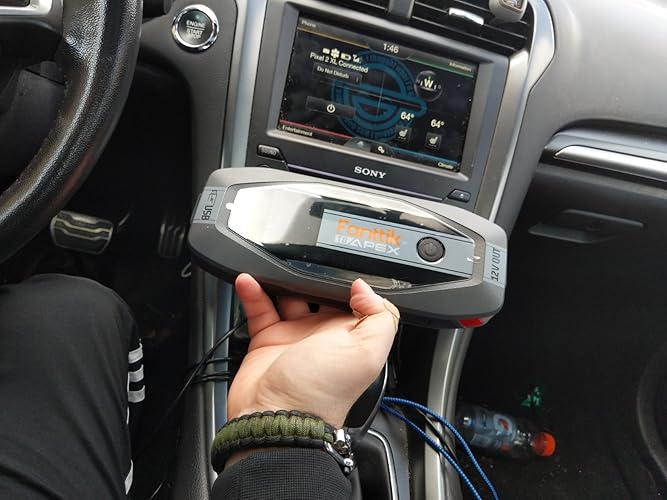
Waiting for roadside assistance sounds simple enough until you're parked on a remote highway with a two-hour ETA and fading daylight. That's where self-reliance becomes more than a virtue — it becomes a safety strategy. A portable jump starter gives you the ability to resolve a dead battery on your own terms, without depending on a passing stranger or an overbooked tow service. For solo travelers and families alike, that independence is invaluable.
Beyond pure convenience, jump starters directly protect your trip timeline. A single battery failure, handled quickly with the right car accessories, can cost you less than fifteen minutes. Without one, the same situation could derail an entire day's itinerary. Among road trip essentials like spare tires and first aid kits, a compact jump starter earns its place by addressing one of the most common — and most disruptive — vehicle emergencies drivers actually face on the road.
Key Features to Look for in a Portable Jump Starter
Not every jump starter is built the same, and choosing the wrong one can leave you just as stranded as having none at all. When evaluating options, focus on the features that directly determine whether the device will perform when it matters most — in the cold, in the heat, or after sitting in your trunk for months.
Power and Reliability for Emergency Jump Starts
The most important spec to understand is peak current, measured in amps, which determines whether the device can actually crank your engine. A unit with insufficient output may fail entirely on larger engines or in cold weather when batteries resist charging most. Match the jump starter's capacity to your vehicle type — compact cars have different demands than trucks or SUVs. Battery capacity, measured in milliamp-hours, also determines how many jump attempts the device can deliver on a single charge, which matters enormously during a genuine roadside emergency. Brands like Fanttik offer a range of portable jump starters sized specifically for different vehicle classes, making it easier to match the right unit to your needs.
Fast Charging and Multi-Function Capabilities
Modern portable jump starters do far more than revive dead batteries. Built-in USB ports let you fast charge smartphones and other devices, turning the unit into a travel power bank when emergencies aren't happening. Look for models with integrated LED flashlights, which prove surprisingly useful during nighttime breakdowns. Safety features like reverse polarity protection and spark-proof clamps are non-negotiable — they prevent accidental damage to your vehicle's electronics and protect you from injury during connection. These combined capabilities make a quality jump starter one of the most versatile car accessories you can carry.
How to Use a Jump Starter Safely: Step-by-Step Solution
Even the best portable jump starter is only useful if you know how to operate it correctly under pressure. Fumbling with clamps in the dark or skipping safety steps can damage your vehicle's electronics or cause injury. Following a clear, consistent process every time ensures both your safety and a successful restart.
Pre-Jump Safety Checks and Preparation
Before connecting anything, park your vehicle on level ground away from traffic and turn off the ignition. Confirm your jump starter is adequately charged — a unit at low battery may not deliver enough current to start the engine. Read the manufacturer's manual at least once before an emergency occurs, not during one. Inspect the clamps and cables for any visible damage, and make sure both the jump starter and the vehicle battery are dry and free of corrosion.
Connecting and Activating the Jump Starter
Sequence matters. Always connect the red (positive) clamp to the dead battery's positive terminal first, then attach the black (negative) clamp to an unpainted metal surface on the engine block — not directly to the negative battery terminal. This grounding technique reduces spark risk near the battery. Once both clamps are secure, power on the jump starter, wait the recommended seconds for the device to stabilize, then attempt to start the vehicle. If the engine doesn't turn over after two or three attempts, wait a few minutes before trying again to avoid overloading the unit.
Post-Jump Procedures and What to Do Next
Once the engine starts, reverse the disconnection sequence: remove the black clamp first, then the red. Drive the vehicle for at least twenty to thirty minutes to allow the alternator to recharge the car's battery naturally. Afterward, recharge your jump starter fully before storing it. A successful jump start doesn't always mean your battery is healthy — if failures repeat, have the battery professionally tested at the next opportunity to avoid being stranded again.
Comparing Portable Jump Starters vs. Traditional Methods
Jumper cables have been a roadside staple for decades, but they come with a fundamental limitation: they're useless without a second vehicle. On a deserted highway or an empty parking lot at midnight, finding a willing stranger with a running car isn't a plan — it's a gamble. A portable jump starter eliminates that dependency entirely, putting recovery power in a device that fits in your glove compartment or backpack.
The practical advantages go beyond just convenience. Traditional booster cables require precise vehicle positioning, running both engines simultaneously, and a degree of coordination that's genuinely stressful during an already frustrating situation. Portable jump starters simplify the entire process into a solo operation with clearly labeled clamps and built-in safety features that cables simply can't offer. They're also significantly safer for modern vehicles, whose sensitive electronics can be damaged by voltage spikes from improper cable connections. For any driver serious about road trip preparedness, a compact portable jump starter isn't just a better alternative to jumper cables — it's a meaningful upgrade in both reliability and peace of mind.
Maintenance Tips to Ensure Your Jump Starter is Always Ready
A jump starter you haven't touched in eight months may fail you at the worst possible moment. Lithium-ion batteries, which power most modern portable jump starters, gradually self-discharge during storage — meaning a unit left uncharged for too long may not have enough reserve power to crank an engine when you actually need it. The fix is simple: recharge your jump starter every three to six months, even when it hasn't been used. Most manufacturers recommend keeping the charge level above fifty percent during long-term storage.
Storage conditions matter just as much as charging habits. Extreme heat, like the kind that builds up inside a parked car in summer, degrades battery cells over time and shortens the device's overall lifespan. Store your jump starter in a cool, dry location — a gear bag in your trunk works well, but avoid leaving it directly on metal surfaces that conduct heat. Before any major road trip, run a quick test: power on the device, confirm the charge indicator reads full, and inspect the clamps and cables for wear or corrosion. Catching a damaged cable at home beats discovering it on a dark highway. These small habits add up to one reliable guarantee — your jump starter will actually work when your battery doesn't.
Integrating Jump Starters into Your Road Trip Gear
A portable jump starter doesn't exist in isolation — it works best as part of a broader set of road trip essentials that collectively keep you prepared for whatever the road throws at you. Think of your vehicle's emergency kit as a system: a spare tire handles blowouts, a first aid kit addresses injuries, and a jump starter covers the single most common mechanical failure drivers encounter on long trips. Each piece fills a specific gap, and together they form a genuinely reliable safety net.
Packing smart means keeping your jump starter accessible without cluttering your trunk. A dedicated gear bag works well — store the jump starter alongside jumper cables as a backup, a tire pressure gauge, a multi-tool, and basic roadside flares or reflective triangles. These car accessories take up minimal space but cover a wide range of scenarios. Position the bag near the top of your trunk load so it's reachable quickly in an actual emergency, not buried under luggage.
Before departure, treat your jump starter check the same way you'd treat checking tire pressure or topping off fluids — it's a pre-trip ritual, not an afterthought. Confirm the charge level, test the power button, and visually inspect the clamps. Integrating this habit into your standard road trip preparation ensures the device is always ready when you need it. Road trips reward preparation, and a fully charged jump starter sitting in a well-organized gear bag is one of the simplest, most effective investments any driver can make before hitting the open road.
Your Jump Starter Is the Road Trip Investment That Pays Off Most
A dead battery on a remote road is one of those problems that feels catastrophic until you're holding the right tool. A reliable portable jump starter transforms that crisis into a manageable inconvenience — one you can resolve in minutes, on your own, without flagging down strangers or waiting hours for roadside assistance.
Throughout this guide, we've covered what makes a jump starter worth trusting: adequate peak current for your vehicle, built-in safety protections, fast charging capabilities, and multi-function features that earn their keep beyond emergencies. We've walked through the step-by-step process for using one safely, explained why it outperforms traditional jumper cables in almost every real-world scenario, and outlined the simple maintenance habits that keep the device ready when your battery isn't.
The bottom line is straightforward — road trips reward preparation, and a jump starter is one of the highest-value car accessories you can add to your travel kit. It takes up minimal space, requires minimal upkeep, and delivers maximum peace of mind. Before your next trip, take the time to select a portable jump starter that matches your vehicle's requirements, charge it fully, and pack it somewhere accessible. That single decision could be the difference between a story you laugh about later and one you'd rather forget entirely.